
What are my rights under the Air Carrier Access Act?
The Air Carrier Access Act of 1986 (ACAA) was designed to prohibit any discrimination against passengers with disabilities by air carriers. It was meant to open the skies and the world to persons regardless of any physical or intellectual disabilities. Although I believe there is a great deal of work that must be done to enforce the law, it has still improved the way travelers with disabilities are treated. The ACAA has made air travel possible for people like me, a triple amputee and wheelchair user. The specific rights of disabled air passengers were outlined by the U.S. Department of Transportation in 1990 in 14 CFR Part 382. The guidelines were most recently updated in 2008, with a major revision taking effect in May 2009.
On December 17, 2024, the DOT issued a landmark final rule titled “Ensuring Safe Accommodations for Air Travelers With Disabilities Using Wheelchairs” (the “Wheelchair Rule”), published at 89 FR 102398. This rule, which also implements certain provisions of the FAA Reauthorization Act of 2024, significantly expanded existing airline obligations under 14 CFR Part 382. It took effect on January 16, 2025, though individual requirements have varying compliance timelines extending through June 2026 for training requirements. Some provisions have been subject to delayed enforcement (see Enforcement Status, below).
 John Morris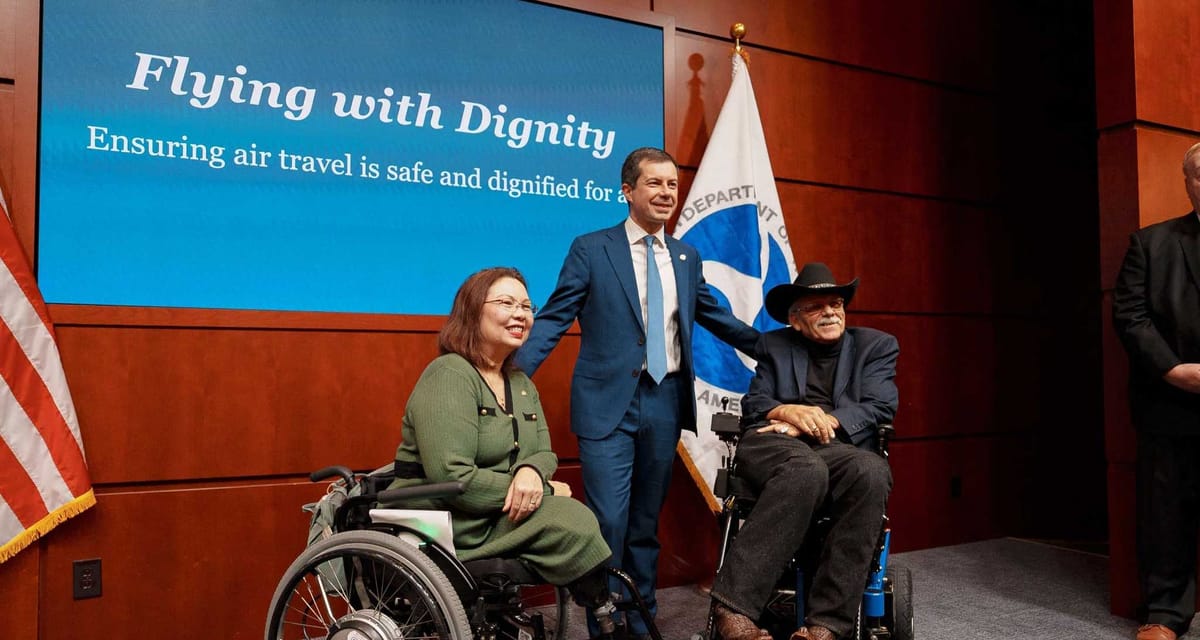
Travelers should note that the Air Carrier Access Act is a law of the United States of America. The rights and protections outlined here do not apply to all flights in the world. The law applies only to the following flights:
- Any flight departing from an airport in the United States, regardless of carrier.
- Any flight arriving to an airport in the United States, regardless of carrier.
- Any flight operated by an air carrier registered in the United States of America – this includes flights between two international destinations. For example, a United Airlines flight between Hong Kong and Singapore would be subject to the ACAA, because United Airlines is a U.S. flagged carrier.
Regarding international air carriers: The ACAA would NOT apply to a British Airways flight between London and Paris, but would on a British Airways flight between London and New York City or vice versa. The European Union has also outlined the rights of disabled airline passengers in Europe.
For a full copy of 14 CFR Part 382, visit www.ecfr.gov. I have written a summary of the most important components of the Air Carrier Access Act below, updated to reflect the December 2024 Wheelchair Rule. This summary describes the responsibilities of airlines and the expectations for passengers with disabilities traveling by air.
Safe and Dignified Assistance (New – 2024 Wheelchair Rule)
For the first time, the 2024 Wheelchair Rule formally defines and codifies the terms “safe” and “dignified” as they apply to airline assistance for passengers with disabilities. Under the new § 382.11(b), all carriers and indirect carriers must provide assistance in a safe and dignified manner. “Safe” is defined as assistance that does not put individuals with disabilities at heightened risk of bodily injury, which may include loss or damage to wheelchairs and other assistive devices that result in bodily injury. “Dignified” means assistance that respects the autonomy, physical integrity, and personal preferences of the individual receiving it.
Additionally, the rule codifies the requirement that all assistance under Part 382 must be performed promptly. Under new § 382.89, whether assistance is prompt is dependent on the totality of the circumstances, with specific urgency requirements for deplaning assistance involving physical transfers.
Assistance at the Airport and Onboard the Airplane
Airlines must provide travelers with disabilities with the following assistance at the airport, if requested by the passenger:
- Carriers shall provide assistance in enplaning and deplaning. The delivering carrier shall be responsible for assistance in making flight connections and transportation between gates. § 382.95(a)
- This assistance shall include the services of personnel and the use of ground wheelchairs, accessible motorized carts, boarding wheelchairs, and/or on-board wheelchairs, and ramps or mechanical lifts. § 382.95(a)
- Carriers must offer preboarding to passengers with disabilities who self-identify at the gate as needing additional time to board. In a March 2013 notice to airlines, carriers were advised by the DOT that preboarding means “before all other passengers, including first class passengers, elite-level passengers, members of the military, passengers with small children, etc.” § 382.93
- Carriers shall not leave a passenger with a disability unattended in a ground wheelchair, boarding wheelchair, or other device, in which the passenger is not independently mobile, for more than 30 minutes. § 382.95(a)(3)
Airlines must also provide services onboard the aircraft (on the ground and inflight), to passengers with disabilities, whether they are non-ambulatory or semi-ambulatory:
- Assistance in moving to and from seats, as part of the enplaning and deplaning processes. § 382.95(b)(1)
- Assistance in preparation for eating, such as opening packages and identifying food. § 382.95(b)(2)
- If there is an on-board wheelchair on the aircraft, assistance with the use of the on-board wheelchair to enable the person to move to and from a lavatory. § 382.95(b)(3)
- Assistance in loading and retrieving carry-on items, including mobility aids and other assistance devices stowed on board. § 382.95(a)(5)
Transportation of Personal Wheelchairs and Mobility Equipment
Airlines are required to provide free and safe transportation for the personal wheelchairs and mobility devices of passengers with disabilities, in accordance with § 382.121 and § 382.123. Wheelchairs may be of any size or weight, so long as they will fit into the wheelchair storage closet in the aircraft cabin, or inside the aircraft cargo compartment. For information on storing wheelchairs in the aircraft cabin, see § 382.121.
New – Cargo Hold Dimension Publication: Under the 2024 Wheelchair Rule, airlines are now required to publish in a prominent and easily accessible place on their public websites the relevant dimensions and other characteristics of the cargo holds of all aircraft types operated by the airline, including the dimensions of the cargo hold entry. This allows passengers to determine before they travel whether their wheelchair or scooter will fit in the cargo compartment. § 382.141(a)(6)
 John Morris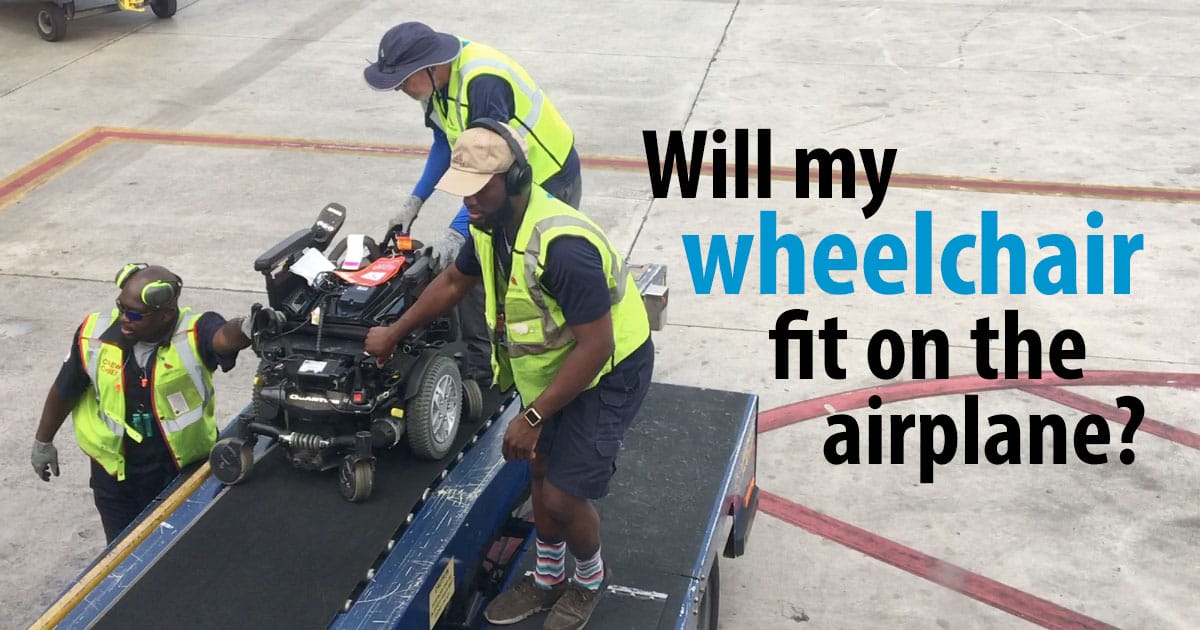
New – Fare Difference Reimbursement: If a passenger’s wheelchair or scooter cannot fit in the cabin or cargo compartment of their booked flight, the airline must reimburse the fare difference between the flight actually taken and the flight the passenger would have taken, limited to flights on the same day, on the same airline, and between the same origin and destination. § 382.141(b)
According to § 382.125(c), airlines must provide for the checking and timely return of passengers’ wheelchairs at the boarding gate. The passenger has the right to reclaim a gate-checked wheelchair at baggage claim instead of at the arriving gate, if he/she so desires.
New – Electronic Notifications: By December 17, 2025, airlines must notify passengers whether their wheelchairs or scooters have been loaded onto their flights (including whether their device could not fit) before the aircraft cabin door closes, and notify passengers before they deplane when their device has been unloaded from the cargo compartment. § 382.125(f)
Should an airline damage your wheelchair, the ACAA places total liability on the carrier, regardless of cost. I have previously had a $25,000 wheelchair replaced after it was destroyed by Delta Air Lines.
Wheelchair Mishandling as a Per Se Violation (New – 2024 Wheelchair Rule)
One of the most significant provisions of the 2024 Wheelchair Rule is the establishment of wheelchair and scooter mishandling as an automatic (per se) violation of the ACAA, subjecting the airline to a separate civil penalty. “Mishandled” is formally defined as “lost, delayed, damaged, or pilfered.” § 382.3
Under § 382.130(a), airlines must return checked wheelchairs, scooters, and other assistive devices to the passenger in the condition in which they were received. Whenever a checked wheelchair or scooter that was in the airline’s custody is not returned in the same condition, there is a rebuttable presumption that the airline mishandled the device in violation of the ACAA.
When mishandling occurs, airlines must notify the passenger in writing of their rights, including: (1) the right to file a claim with the airline; (2) the right to receive a loaner wheelchair; (3) the right to choose a preferred vendor for repairs or replacement; and (4) the right to contact a Complaints Resolution Official (CRO). Airlines must also provide status update notifications on delayed wheelchairs or scooters.
Mandatory Hands-On Training (New – 2024 Wheelchair Rule)
The 2024 Wheelchair Rule mandates that every frontline employee or contractor who physically assists passengers with disabilities or handles wheelchairs must complete initial hands-on training involving mannequins or demonstration equipment, and pass an annual competency assessment. “Hands-on training” is defined as training that includes a demonstration or practice component in which the individual is physically shown or shown how to perform the technique or task, and then demonstrates the technique or task. § 382.3, § 382.141
Training standards must cover proper handling techniques, communication with passengers, and the safe use of equipment. Compliance deadlines for training requirements extend to June 17, 2026.
Loaner Wheelchair Requirements (New – 2024 Wheelchair Rule)
Airlines must now provide and pay for loaner wheelchairs or scooters while passengers are waiting on returns, repairs, or replacements for mishandled devices. Airlines must consult with the individual to ensure the loaner fits the passenger’s functional and safety-related needs, as much as possible. If the loaner offered by the airline does not meet the passenger’s needs, the airline must allow the passenger to find and secure an alternative, and must reimburse the passenger for the cost. § 382.132
Improved On-Board Wheelchair Standards (New – 2024 Wheelchair Rule)
The rule sets new standards for on-board wheelchairs (OBWs), requiring upgrades on twin-aisle aircraft by October 2026, with full compliance across eligible aircraft by October 2, 2031. The OBWs must meet updated safety, maneuverability, and accessibility requirements, and must provide at least partial access into one lavatory for transfers.
Accessibility Features of Aircraft
Commercial aircraft with more than 30 seats must adhere to the following requirements and provide the listed design and accessibility features:
- At least one-half of all aisle seats must have a movable aisle armrest. Seating with movable aisle armrests must be made available to persons with disabilities who require them. § 382.61(a)(1)
For aircraft with more than 100 seats:
- A priority space in the cabin must be reserved for the stowage of at least one folding wheelchair. § 382.61(a)(2)
- Aircraft with more than one aisle should provide at least one lavatory accessible via an on-board aircraft wheelchair. The lavatory must provide door locks, call buttons, grab bars, faucets and other controls accessible to a person with a disability. § 382.61(a)(3)
- All aircraft with an accessible lavatory and more than 60 seats must be equipped with an on-board aisle wheelchair. § 382.61(a)(4)
- Passengers requiring use of the on-board wheelchair for access to the lavatory must receive assistance in maneuvering it from carrier personnel. Flight attendants are not required to provide assistance in lifting the passenger from seat to aisle chair or from the aisle chair to the lavatory toilet.
Read more about wheelchair accessible lavatories in this article:
 John Morris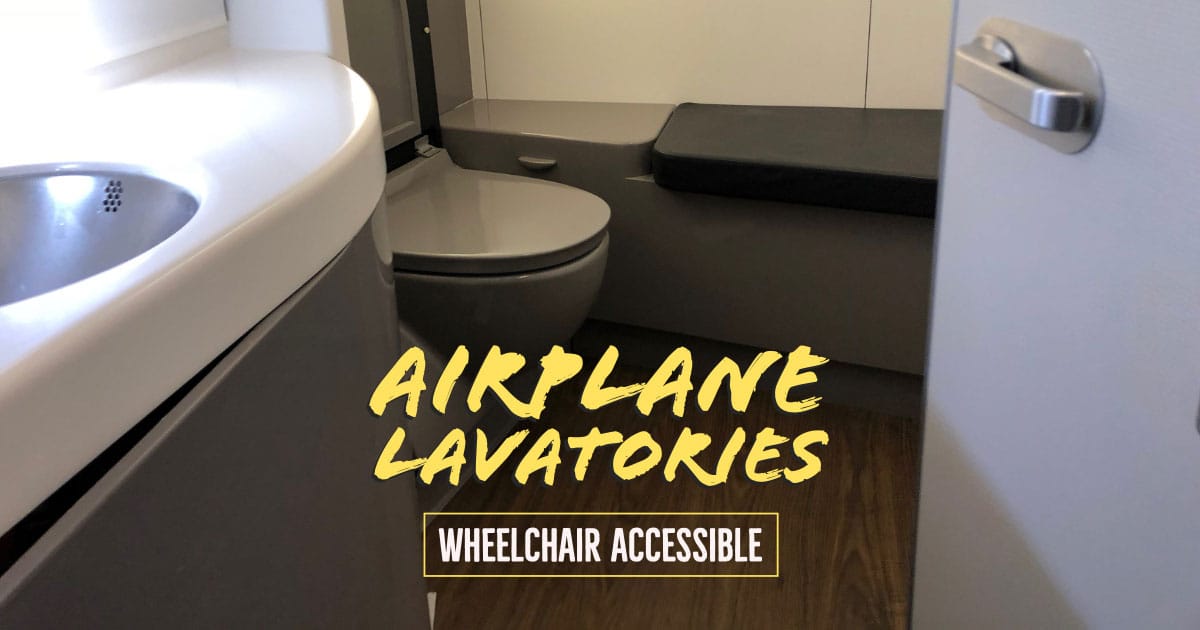
Accessibility of Airport Facilities
The Air Carrier Access Act requires the following of airport facilities:
- An accessible path must be available between the gate and the area from which aircraft are boarded. § 382.51(c)
- Inter-terminal shuttles and people movers must be wheelchair accessible. § 382.51(d)
Notifying Airlines of Needed Services
Except under the following conditions, a disabled passenger is not required to provide advance notice to an airline about their intent to travel, their disability, or any service accommodations needed.
In accordance with § 382.73, a carrier may require up to 48 hours advance notice and one-hour advance check-in for any individuals who wish to receive the following services, types of equipment, or accommodations:
- Medical oxygen for use on board the aircraft during flight.
- Carriage of an incubator.
- Hook-up for a respirator to the aircraft electrical power supply.
- Accommodations for a passenger who must travel in a stretcher.
- Transportation for an electric wheelchair or scooter on a flight scheduled to be made on an aircraft with less than 60 seats.
- Provision by a carrier of hazardous materials packaging for the batteries of an electric wheelchair or scooter, if necessary.
- Provision of an on-board wheelchair on aircraft with less than 100 seats which do not have an accessible lavatory.
It is still recommended that passengers notify the airline in advance for any need when possible, whether required by this section or not.
Care Attendants
Except in very limited circumstances, aircraft carriers cannot require a disabled person to travel with a personal care attendant as a condition of being provided air transportation. A carrier’s concern that a disabled passenger will require the use of an inaccessible lavatory or may otherwise need extensive special assistance are not grounds for requiring an attendant. § 382.75(a)
The following exceptions to this rule are provided when the carrier believes that an attendant is necessary for safety:
- A person traveling in a stretcher or incubator. § 382.75(b)(1)
- A person who, because of a mental disability, is unable to comprehend or respond to safety instructions. § 382.75(b)(2)
- A person with a mobility impairment so severe that the person is unable to assist in his or her own evacuation of the aircraft. § 382.75(b)(3)
- A person with hearing and vision impairments so severe that the person cannot receive or understand safety instructions. § 382.75(b)(4)
If the carrier determines that a person meeting the above criteria must travel with an attendant, contrary to the individual’s self-assessment that he or she is capable of traveling independently, the carrier shall not charge for the transportation of the attendant. § 382.75(c)
Service Animals
Note: The service animal regulations were significantly revised by a January 2021 DOT final rule, and are now found primarily in § 382.72 and § 382.73.
Airlines must permit passengers with a disability to travel with a service animal, which is now defined exclusively as a dog, regardless of breed or type, that is individually trained to do work or perform tasks for the benefit of a qualified individual with a disability, including a physical, sensory, psychiatric, intellectual, or other mental disability. § 382.3
Critical change from prior law: Emotional support animals are no longer recognized as service animals under the ACAA. The 2021 rule removed the prior category of “emotional support animals” from protection. Airlines may now treat emotional support animals as pets, subject to standard pet policies and fees. Only dogs individually trained to perform specific tasks qualify as service animals. Psychiatric service dogs are treated the same as other service dogs and require no additional documentation beyond the standard DOT service animal forms.
Airlines may determine whether an animal is a service animal by:
- Asking an individual with a disability if the animal is required to accompany the passenger because of a disability and what work or task the animal has been trained to perform.
- Looking for physical indicators such as the presence of a harness or vest.
- Observing the behavior of the animal.
- Requiring passengers to complete DOT-developed service animal forms attesting to the animal’s training, good behavior, and good health. For flights of 8 hours or more, the passenger must also attest that the animal either will not relieve itself during the flight or will do so in a sanitary manner.
Airlines may deny transport to a service dog if the dog poses a direct threat to the health or safety of others, would cause a significant disruption to cabin service, is too large to be safely accommodated in the cabin, or would be prohibited from entering a foreign country of destination. Airlines may also deny transport if the passenger does not provide the required DOT service animal forms. An airline must provide a written explanation of any denial within 10 calendar days. If your service animal is denied carriage, you may submit a complaint to the U.S. Department of Transportation.
Enforcement Status of the 2024 Wheelchair Rule
The 2024 Wheelchair Rule took effect on January 16, 2025. However, the DOT has exercised enforcement discretion on multiple occasions. Initially, DOT announced it would not enforce the new provisions until March 20, 2025. This was extended to August 1, 2025, and then again in September 2025, when the DOT delayed enforcement of four specific provisions — § 382.125(e) (pre-departure notifications), § 382.130(a) (mishandling liability), § 382.132 (loaner wheelchairs), and § 382.141(a)(6) (cargo hold dimension publication) — until December 31, 2026.
 John Morris
The enforcement delays were prompted by a lawsuit filed in the 5th U.S. Circuit Court of Appeals by Airlines for America, along with American Airlines, Delta Air Lines, Southwest Airlines, United Airlines, and JetBlue Airways, challenging certain provisions of the rule. The DOT stated it needed additional time for officials to review the rule for consistency with the law and Administration policies.
It is important to note: The enforcement discretion applies only to new or revised requirements imposed by the Wheelchair Rule. All obligations that existed under 14 CFR Part 382 prior to the December 2024 rule remain fully enforceable. Airlines are not permitted to roll back pre-existing protections.
Last updated: March 2026
This article reflects regulations as amended through the December 17, 2024 Wheelchair Rule (89 FR 102398), the January 2021 Service Animal Rule, and enforcement discretion notices through September 30, 2025. For the latest enforcement updates, visit DOT Aviation Consumer Protection.