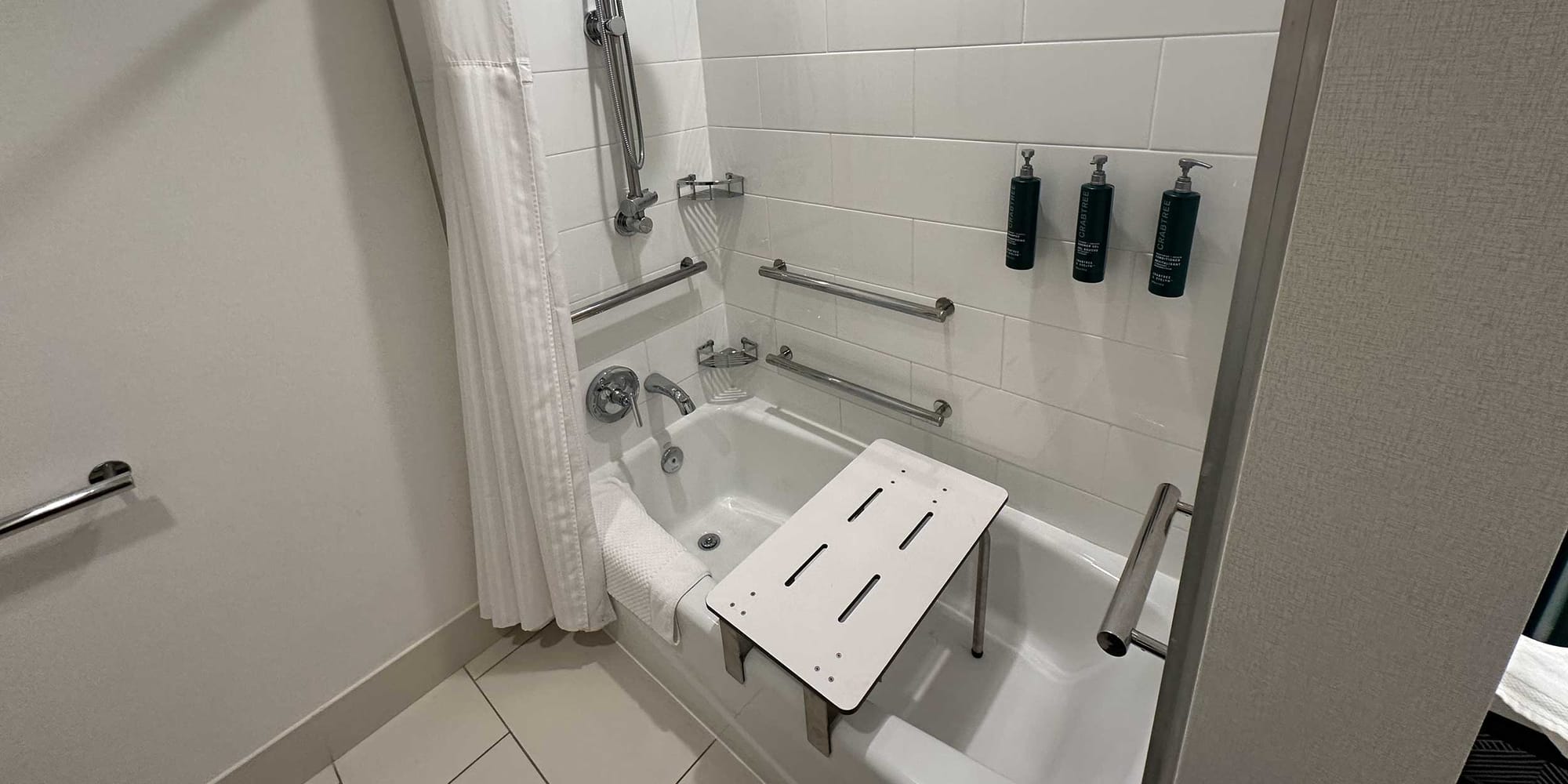
Over the past few years, I have noticed a growing tend in new hotel builds and renovations: many properties are eliminating bathtubs — including in ADA accessible guest rooms. That is a meaningful development, because bathtubs with grab bars and a transfer seat are the preference of many disabled travelers, particularly older adults.
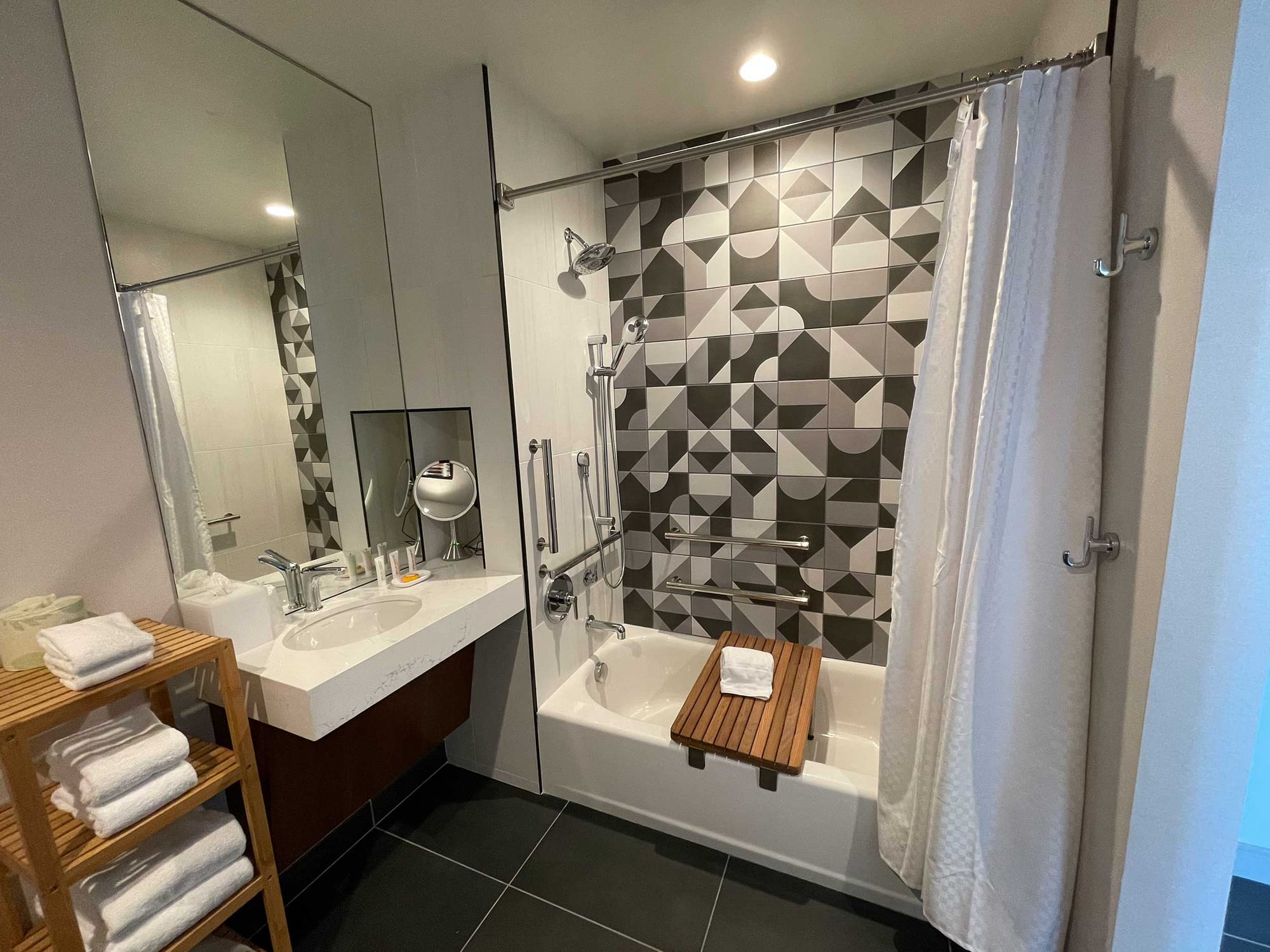
I previously asserted that any hotel's failure to provide rooms with an ADA accessible bathtub was illegal. It turns out that I was wrong, due to a loophole of sorts written into the ADA Standards for Accessible Design. Upon a closer reading of the accessible bathtub regulations, I discovered that there is a way for hotels to legally remove bathtubs from their properties entirely, but it requires an adjustment that most hotels have not made.
ADA Requirements for Accessible Bathtubs and Showers in Hotels
Hotels built or altered on or after March 15, 2012 must follow the 2010 ADA Standards for Accessible Design, which the Department of Justice adopted in 2010. The hotel guest room rules live in Section 224 of the Standards, with the technical details largely in Section 806.
Section 224.2 sets how many guest rooms with mobility features a property must provide based on its total room count. The table splits those rooms into two groups: rooms with roll-in showers and rooms without them.
Table 224.2 Guest Rooms with Mobility Features
| Total Number of Guest Rooms Provided | Minimum Number of Required Rooms Without Roll-in Showers | Minimum Number of Required Rooms With Roll-in Showers | Total Number of Required Rooms |
|---|---|---|---|
| 1 to 25 | 1 | 0 | 1 |
| 26 to 50 | 2 | 0 | 2 |
| 51 to 75 | 3 | 1 | 4 |
| 76 to 100 | 4 | 1 | 5 |
| 101 to 150 | 5 | 2 | 7 |
| 151 to 200 | 6 | 2 | 8 |
| 201 to 300 | 7 | 3 | 10 |
| 301 to 400 | 8 | 4 | 12 |
| 401 to 500 | 9 | 4 | 13 |
| 501 to 1000 | 2 percent of total | 1 percent of total | 3 percent of total |
| 1001 and over | 20, plus 1 for each 100, or fraction thereof, over 1000 | 10, plus 1 for each 100, or fraction thereof, over 1000 | 30, plus 2 for each 100, or fraction thereof, over 1000 |
Source: 2010 ADA Standards for Accessible Design, §224.2
The number of accessible rooms required increases according to the total number of rooms in the hotel. All hotels, including properties with as few as one room, must have at least one of what the table labels "Rooms Without Roll-in Showers" — bathtubs obviously satisfy this requirement, but the Standards also specify transfer-type showers as an acceptable bathing fixture.
The requirement to provide ADA accessible rooms with roll-in showers kicks-in once a hotel had 50 or more total guest rooms.
Do you value my reporting on accessible travel destinations, news and trends? Please consider supporting this publication by upgrading to a paid membership.
The "loophole" — Transfer showers can (legally) take the place of ADA accessible bathtubs
For accessible rooms without a roll-in shower, the ADA Standards treat a bathtub and a transfer shower as interchangeable. California's version of the rule, Section 11B-224.2, spells it out in plain language: "provide either a bathtub...or a transfer type shower." Hotels can legally have zero bathtubs in their accessible rooms, as long as a true transfer shower stands in place of a tub.
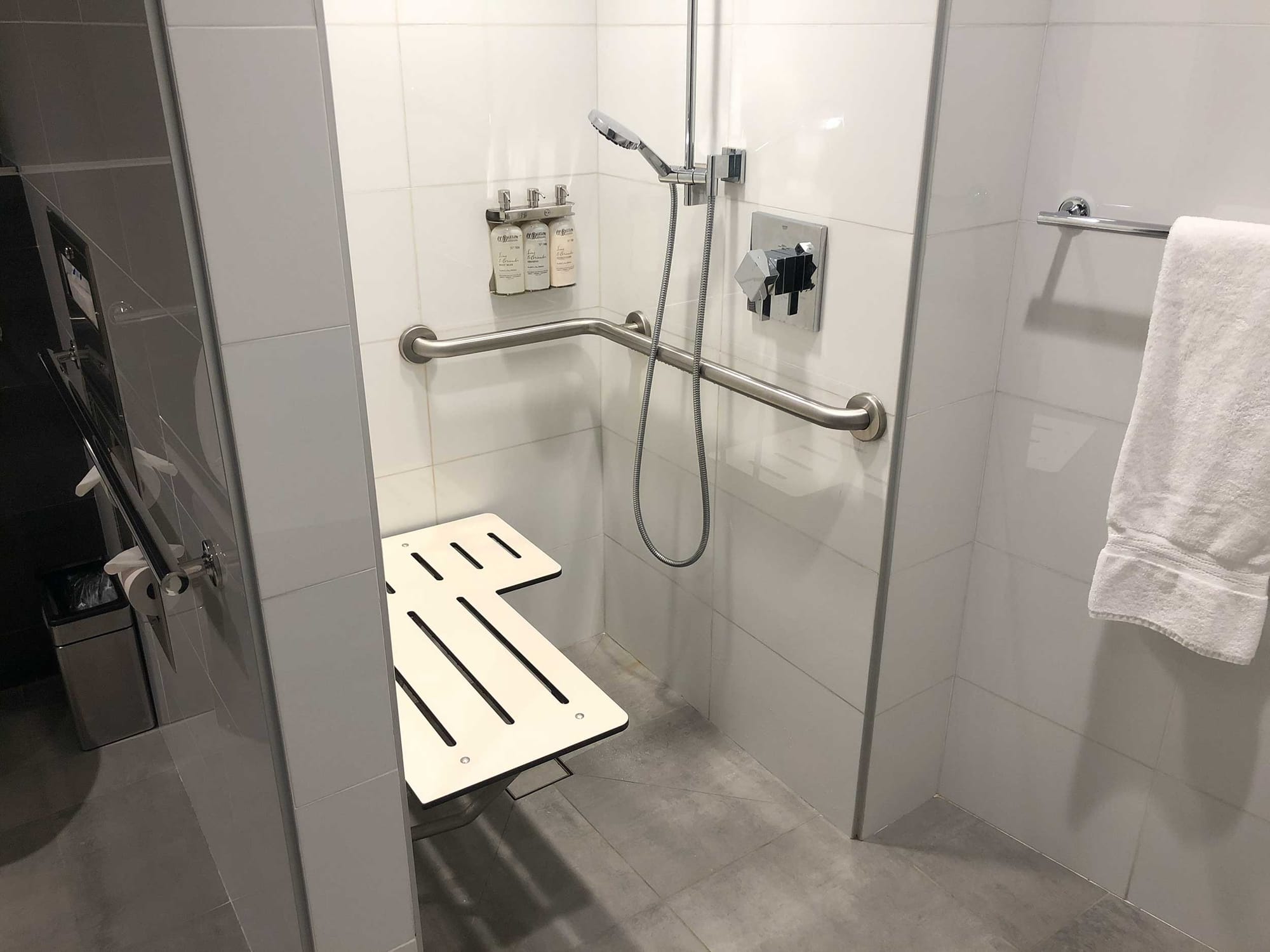
It is important to note, however, that transfer showers are not roll-in showers. A transfer-type shower is a specific, technically defined fixture. Transfer shower compartments must measure exactly 36 inches by 36 inches square — these are absolute dimensions, not minimums. The transfer shower must have a wall-mounted seat set 17 to 19 inches above the floor. Grab bars are required on the wall opposite the seat and on the back wall, and the controls must be reachable. The threshold to enter the shower can be no higher than one-half of an inch.
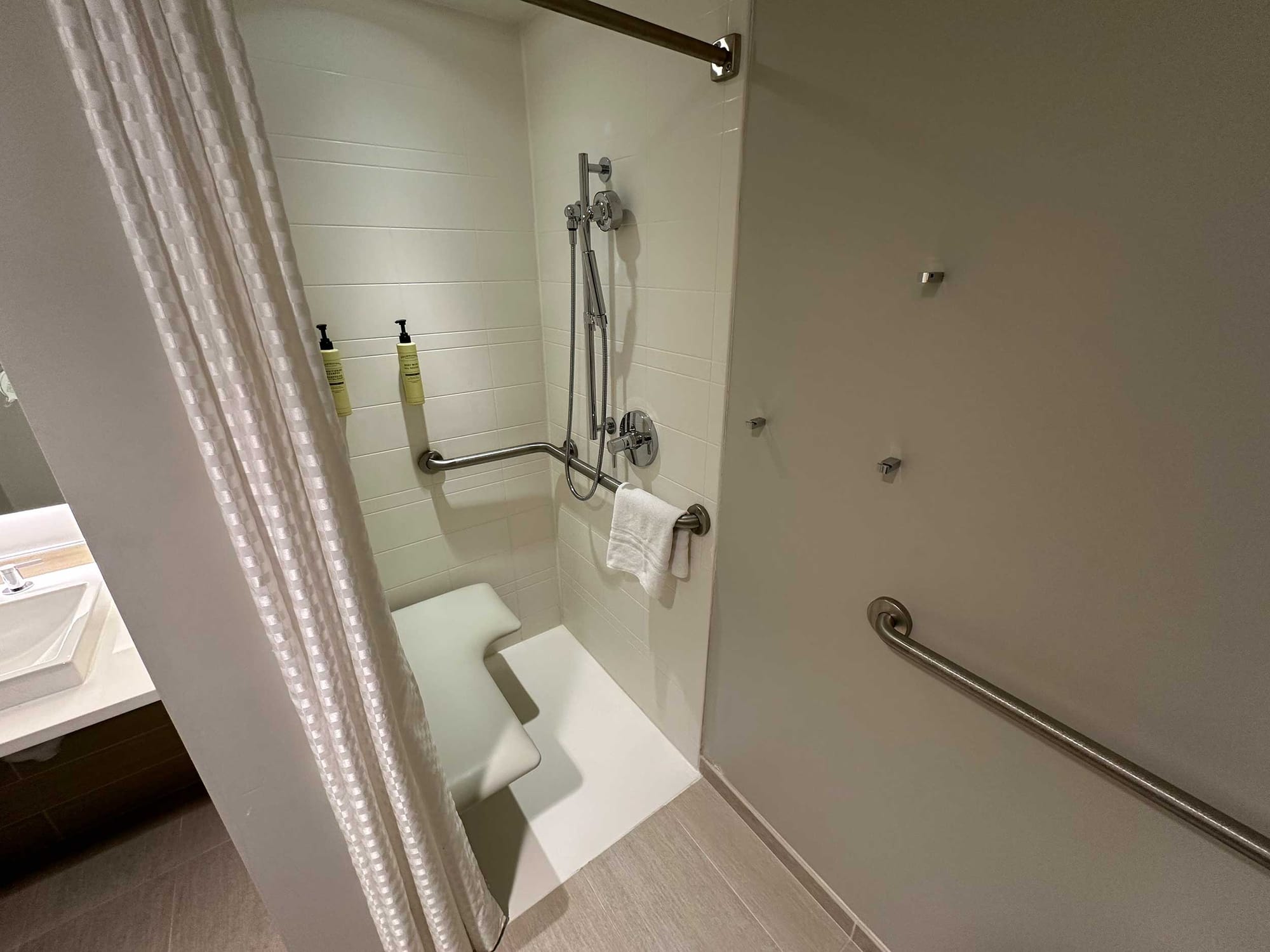
These accessibility features and design standards make transfer showers distinctly different from what hotels often market as a "walk-in shower." A curbless, glass-enclosed shower with a nice tile floor is not automatically a transfer shower. Without the right size compartment, a secure seat and grab bars/water controls in the appropriate positions, it is just a shower — not an accessible transfer-type shower that meets the ADA Standards.
Looking ahead: Trends favor the elimination of bathtubs in hotel rooms
The elimination of bathtubs from hotel rooms is accelerating — some major brands have eliminated them altogether in new construction — and it is a trend that I do not expect to slow, at least not in the near term. Bathtubs take up space and designers increasingly view a sleek shower as the more modern, more marketable choice. I expect tubs to keep disappearing from standard guest rooms and likely ADA accessible rooms as well.
Many architects and designers are less than well-versed in ADA requirements and, since bathtubs were until recently a staple, few have designed spaces with transfer-type shower compartments. I anticipate there will be compliance issues long into the future — roll-in showers have been mandated for more than 30 years, yet few are ADA compliant, even today!
Final Thoughts
The disability community is divided on which bathing fixtures are preferable, simply because individual travelers have varying accessibility needs. The ideal hotel is one that incorporates ADA compliant bathtubs, roll-in showers and transfer showers into its accessible room inventory, to afford travelers the widest range of choice.
Where bathtubs are disappearing, it is important that hotel operators be held to account to the ADA Standards — only transfer showers are an acceptable replacement for tubs, and all fixtures must comply with the design standards. If you run into a hotel that lacks compliant tubs or transfer showers in their accessible rooms, you can can raise it with the property directly and, if necessary, file a complaint with the Department of Justice's Civil Rights Division.