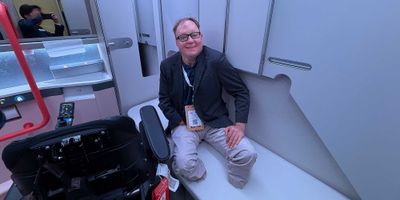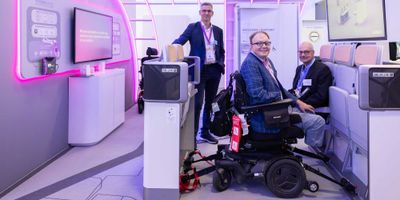
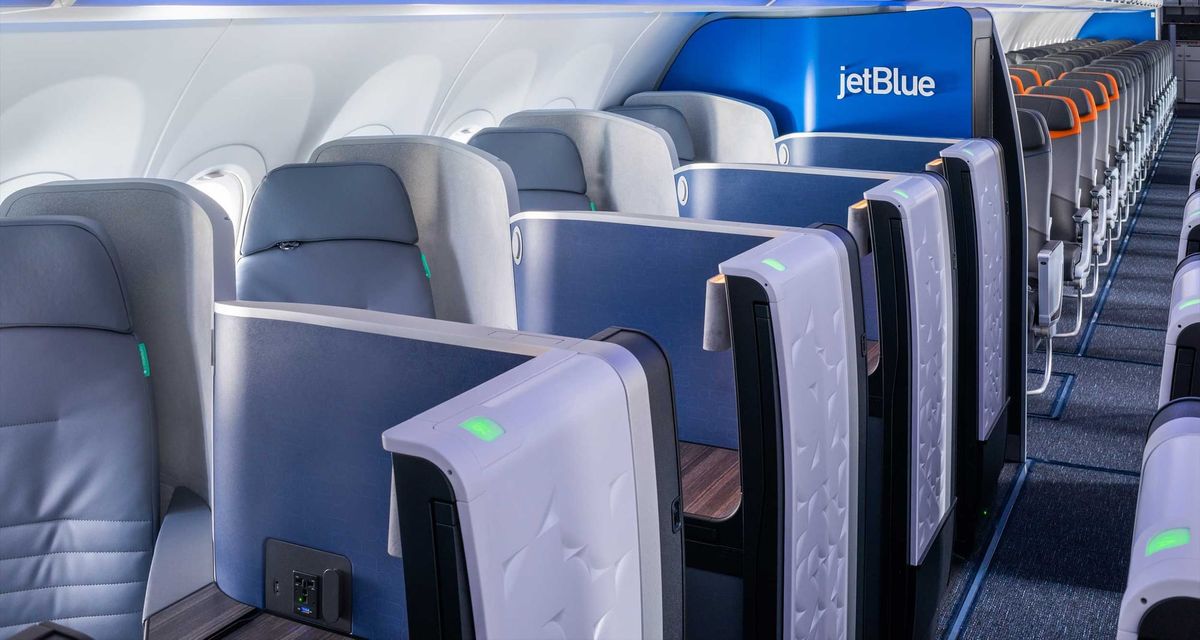
One of the most frightening moments of my life as a wheelchair user happened in an airplane seat. In 2023, I flew JetBlue's Mint Suite from Boston to Los Angeles. On arrival, a team of airline staff tried to lift me out of the seat with a sling, lost their grip, and left me dangling upside down with my head near the floor. One employee grabbed me by the shirt collar, choking off my air. I wrote about that flight and called it the least accessible business class seat flying today.
 John Morris
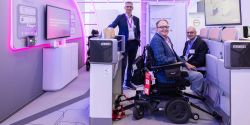
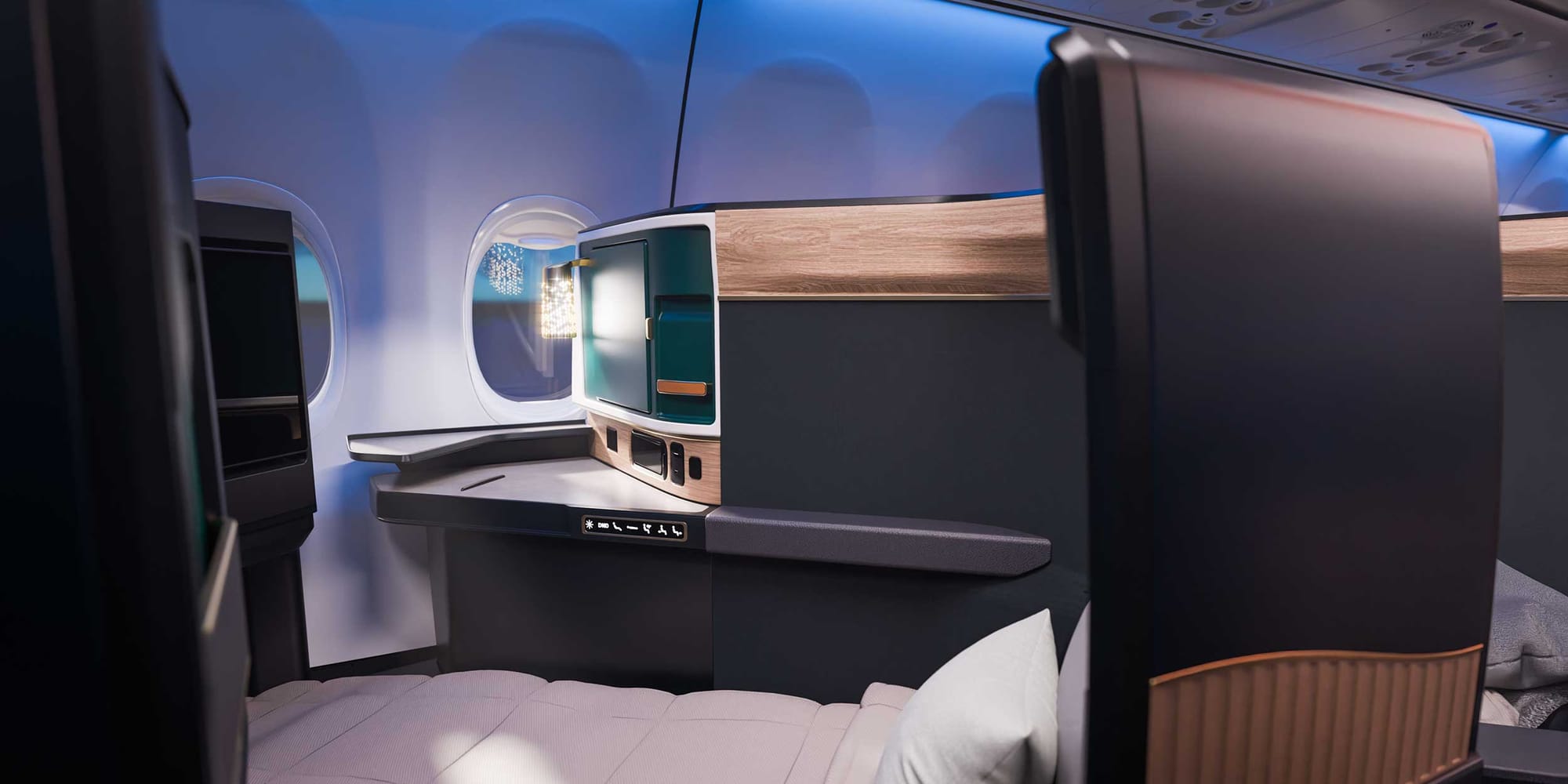
So when Alaska Airlines unveiled its new Aurora Suites for the Boeing 737-10 MAX last month, I skipped past the big screens and the northern lights paint job and looked at one thing: which way the seats face.
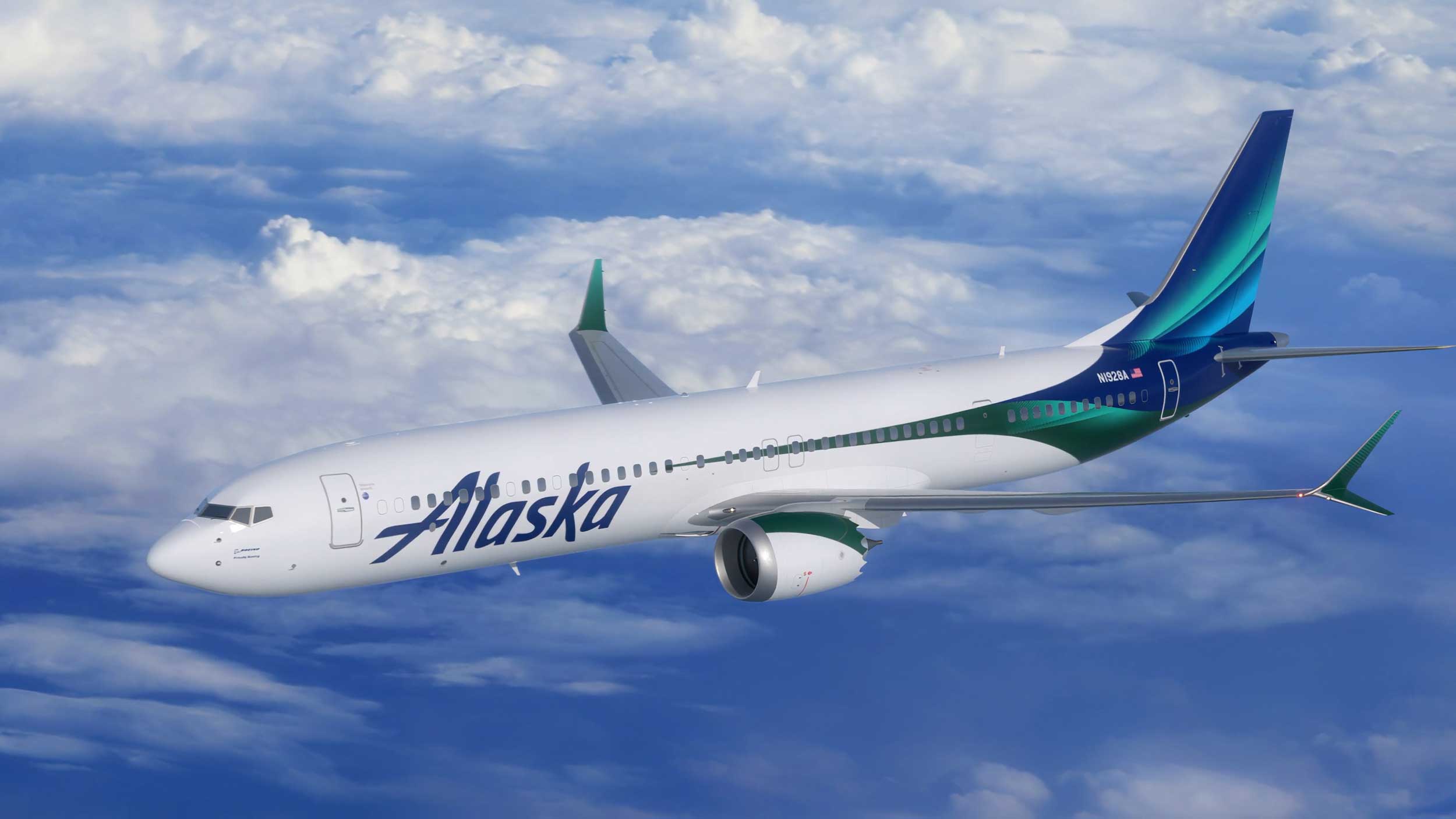
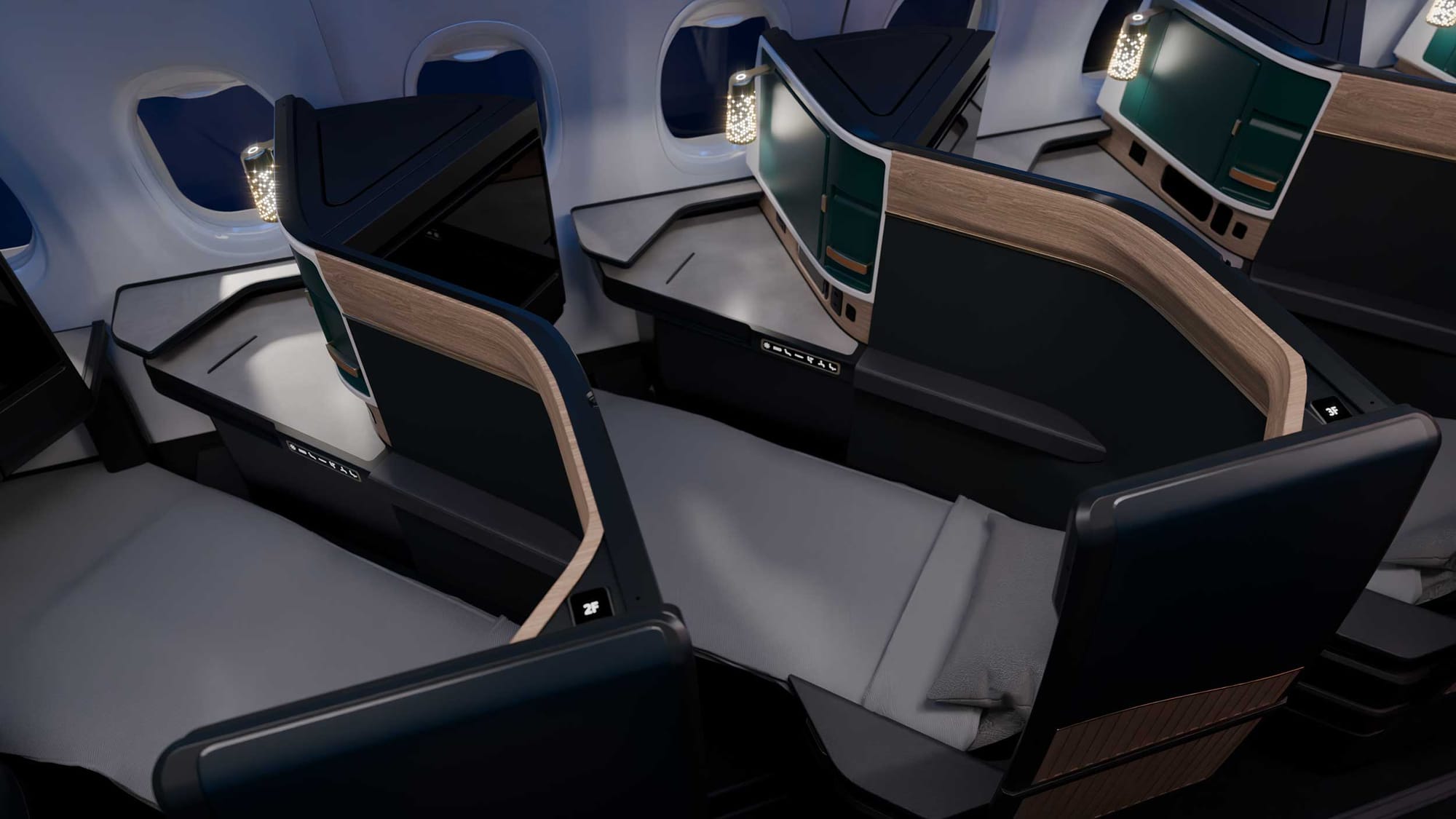
Images courtesy Alaska Airlines.
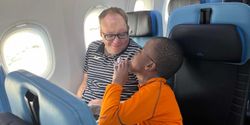
To my pleasant surprise, Alaska's seats are arranged in a reverse herringbone configuration, which means they face the window. This bucks the trend of competitors like JetBlue, American and United, which have installed herringbone seats that face the aisle on narrow-body airplanes. This design choice decides whether a wheelchair user can transfer or be moved safely from the aisle chair into the seat, or whether they have to be hauled over into a narrow pod.
"Holy Aurora!," I thought — Alaska really got this one right.
Hello, Aurora!
Aurora is Alaska's new name for its best seats and service. On the wide-body Boeing 787 Dreamliners, Aurora is the airline's international business class offering. On the narrow-body 737-10 MAX, it will be sold as first class on coast-to-coast flights, the first time Alaska has offered fully flat beds on a single-aisle plane.
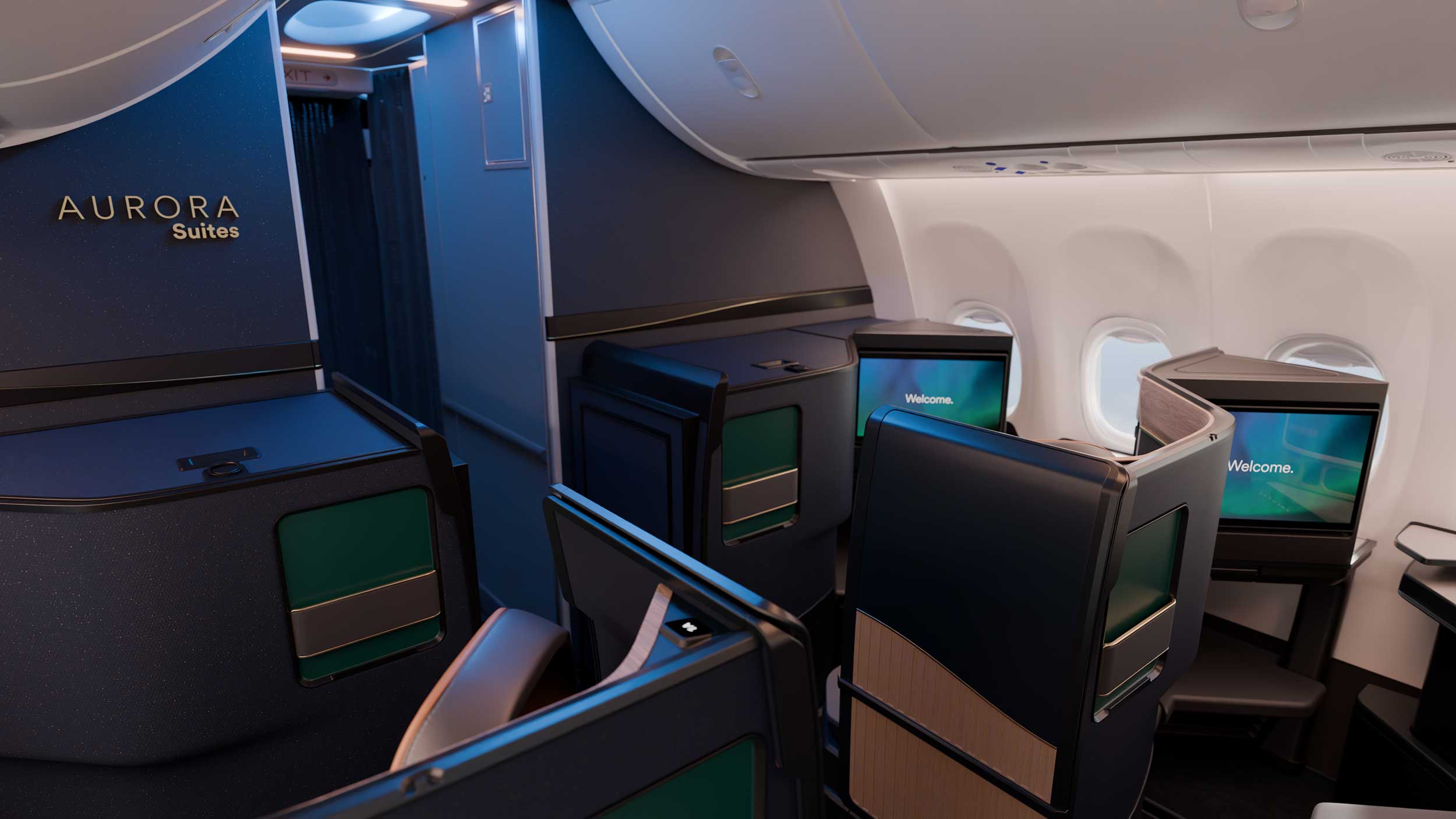
At least 25 of the new 737s will each have 12 Aurora Suites, set one on each side of the aisle across six rows. Each suite will feature direct aisle access, a seat that transforms into a bed, a large entertainment screen and plenty of charging options. The planes are expected to start flying in 2028, with early routes connecting the West Coast and New York.
The Elevate Ascent Business Class Seat
Alaska will be using a single-aisle version of the Ascent seat from Elevate Aircraft Seating on its Boeing 737-10 MAX aircraft. Elevate started out as Adient Aerospace, a company Boeing co-founded with car seat maker Adient, and took its new name in 2025.
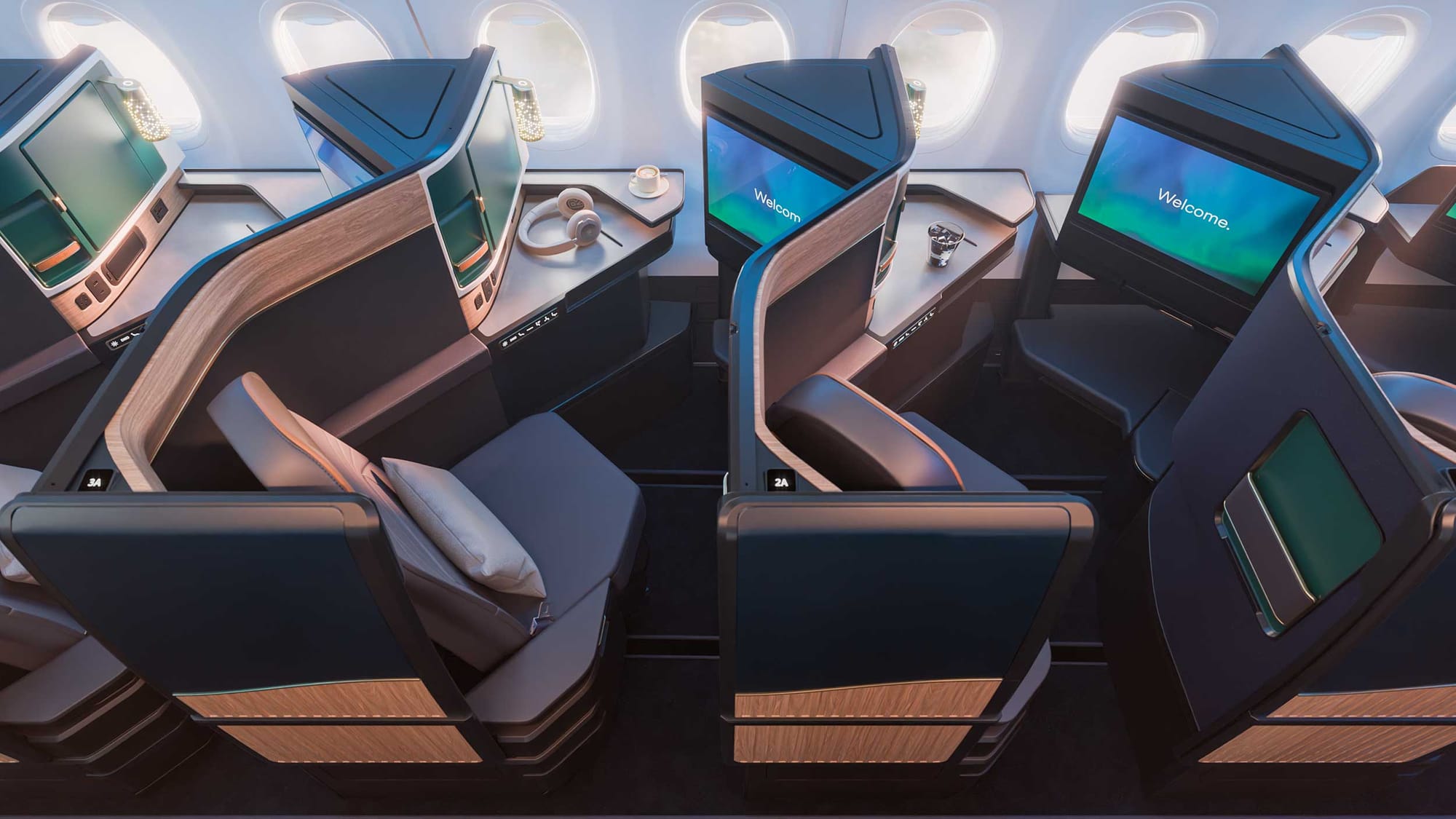
I am familiar with the Ascent seating product, and flew it for the first time on American Airlines earlier this year. On American, the seat is referred to as the "Flagship Suite" and it has been installed on select Boeing 787-9 and Boeing 777-300 airframes. In my review of the seat, I found that the reverse herringbone seat faces the right way, but American boxed it in with a fixed wall that houses a sliding door. That wall blocks much of the seat from the aisle and makes a safe lateral transfer from the aisle chair challenging. The fold-down aisle armrest also collapsed under my weight when I pushed on it to reposition myself.
Alaska's 737 version appears to drop the door (but not the wall), which will hopefully mean a slightly more open side facing the aisle.
What Alaska Still Needs to Get Right
Facing the right way is a strong start, but it cannot be the finish line. Alaska has two years before these planes fly, and four details will decide whether the Aurora Suite truly works for wheelchair users on the Boeing 737-10 MAX aircraft.
- Armrest Accessibility — The Air Carrier Access Act rules (14 CFR § 382.61) require movable aisle armrests on at least half of the aisle seats in each cabin and, while the armrest will likely be stowed for takeoff and landing, Alaska should install sturdier armrests that are strong enough to push against. Wheelchair users need strong surfaces to push against while repositioning.
- Movable Wall/Partition — Delta Air Lines' "Delta One" business class seats feature a retractable wall that moves out of the way to permit safe, lateral transfers into the seat for wheelchair users. Alaska should incorporate a similar capability into its Aurora seats.
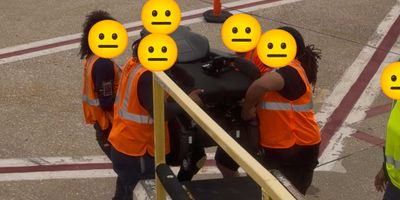
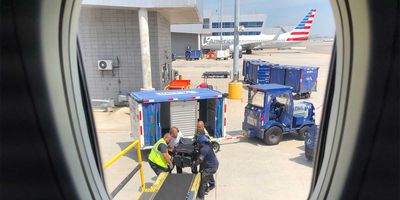
- Training of Assistance Staff — Even in the best case scenario, transferring from an aisle chair to a business class seat can be challenging for many disabled flyers. The workers doing the lifting and assisting need to be familiar with he seating products, and this is possible only through adequate and recurrent training. Alaska should build a training program that involves real wheelchair users and the airport teams who perform transfers, and make that training public rather than secret. Travelers should know what to expect!
- Bathroom accessibility — Like every single-aisle plane flying today (with perhaps the exception of Delta's Airbus A220 with a wheelchair accessible lavatory), the Boeing 737-10 MAX will not have a restroom a wheelchair user can enter with an onboard wheelchair and a helper. On a six-hour flight across the country, that is a serious barrier. Alaska should adopt an accessible lavatory on these aircraft, even if doing so comes at the expense of one row of seats or reducing the total lavatory count by one.
By selecting a reverse herringbone seating solution in the Aurora cabin, Alaska Airlines has already bested its competitors, but more can and should be done to improve the disabled passenger experience.
Stories like this one, and other accessible travel resources, make their way to your inbox because of the members who support my work and advocacy. Would you consider upgrading to a paid subscription and helping me to keep this website online as a resource for all?
The Bottom Line
Alaska watched its rivals make a terrible, customer-unfriendly mistake by installing aisle-facing business class seats on narrowbody aircraft. The carrier's forthcoming Aurora business class product on the Boeing 737-10 MAX will avert that error, opting instead for a seating product that faces the window and will make transfers easier and safer for wheelchair users.
While I doubt accessibility was the primary driver for this decision (it turns out, all passengers prefer to face the window rather than the aisle), I'll take a good result however it comes. If accessibility is a real priority at Alaska Airlines, the carrier will work to incorporate sturdy armrests, a retractable wall, real training and testing with wheelchair users, and a truly accessible lavatory into its new aircraft. Do that, and the Aurora Suite could become the most accessible lie-flat seat on any single-aisle plane in America.