Each year, I analyze publicly available data on disabled passenger complaints and wheelchair mishandling to rank the airlines most and least likely to provide a positive experience for disabled flyers. Half of that data is currently missing, due to the U.S. Department of Transportation's transition to its new Aviation Complaint, Enforcement, and Reporting System (ACERS). 2025 complaints data was deferred to "early 2026" but, as of this writing, it has yet to materialize — a frustrating reality, since complaint volume is among the most direct measures of how airlines are treating disabled passengers.
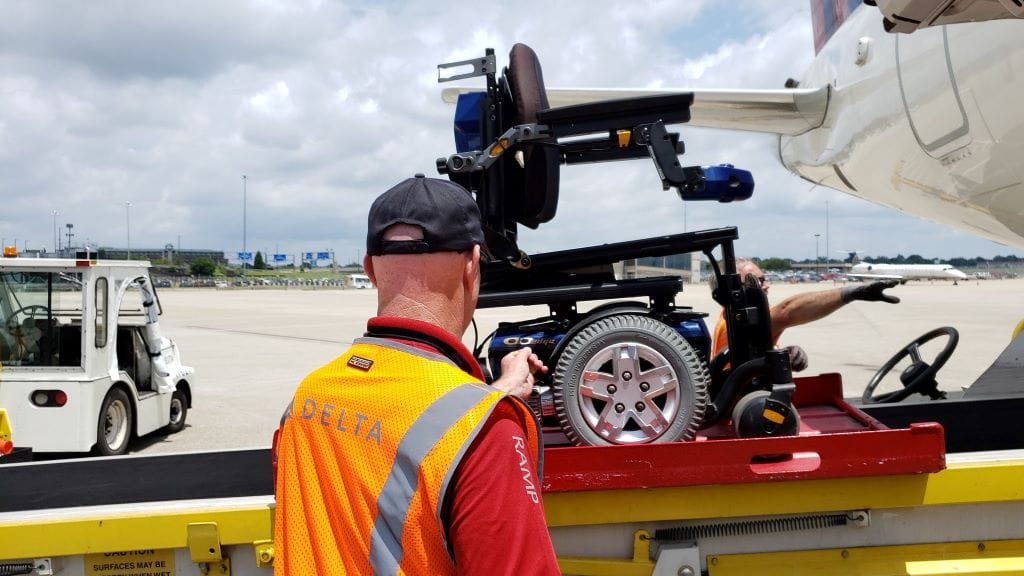
In the absence of that data, wheelchair and scooter mishandling rates offer the best available window into airline performance. The data, covering the full 2025 calendar year, is reported by airlines to the Bureau of Transportation Statistics and includes wheelchairs and scooters that were lost, damaged, delayed or pilfered while in the airline's custody on domestic nonstop passenger flights.
Ranking U.S. Airlines Using 2025 Wheelchair Damage Statistics
Based on full-year data for 2025 included in the February 2026 Air Travel Consumer Report (ATCR), here is a ranking of airlines by the rate of mishandled wheelchairs and scooters per 100 enplaned (the 2024 rates are included in parentheses):
- Delta Air Lines — 0.43% (0.63%) [BEST PERFORMER]
- Allegiant Air — 0.74% (0.75%)
- United Airlines — 1.06% (0.97%)
- Southwest Airlines — 1.19% (1.44%)
- Hawaiian Airlines — 1.20% (1.04%)
- Spirit Airlines — 1.33% (2.07%)
- Alaska Airlines — 1.37% (1.54%)
- American Airlines — 1.41% (1.63%)
- Frontier Airlines — 1.43% (1.76%)
- JetBlue Airways — 1.44% (1.59%) [LAST PLACE]
In 2025, airlines carried 907,259 wheelchairs and scooters — roughly 8,000 more than in 2024. The industry-wide mishandling rate fell from 1.26% in 2024 to 1.09% in 2025, continuing a multi-year downward trend. That translates to approximately 1,450 fewer mishandled devices year-over-year, which represents real improvement for real people.
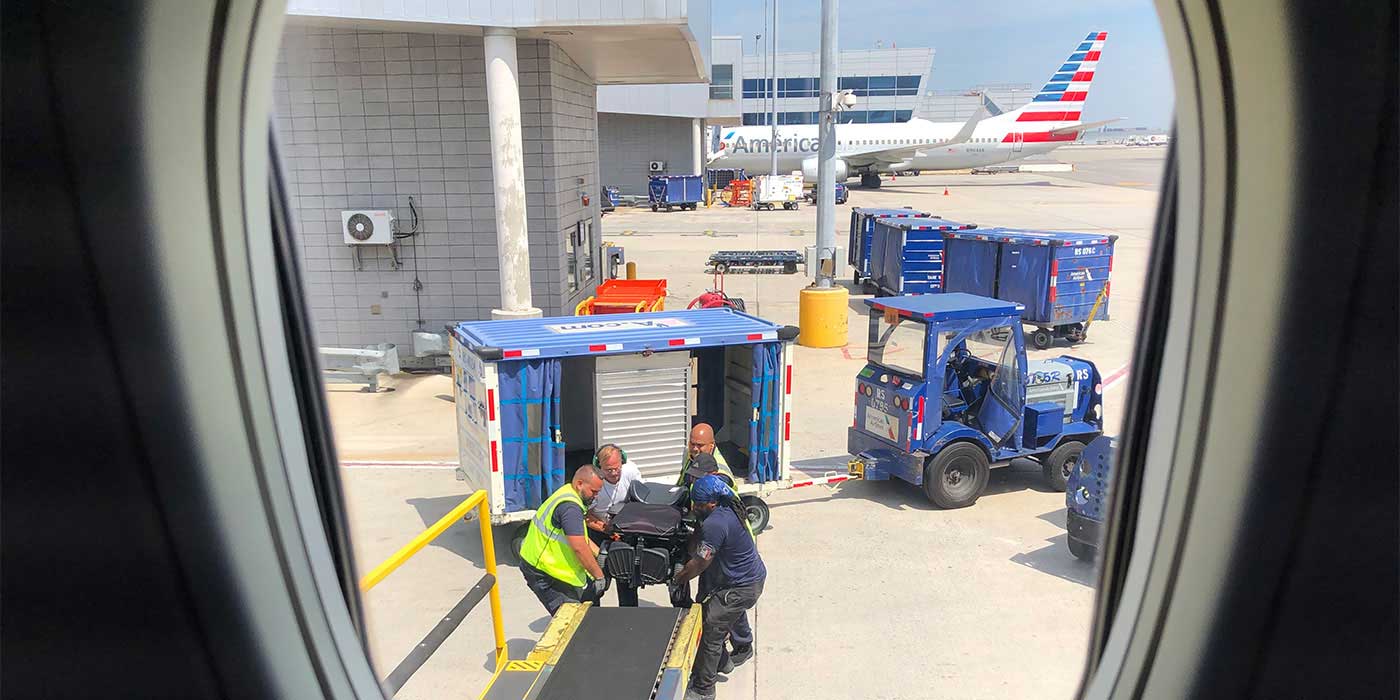
One reason for the continued improvements in wheelchair handling may be investments in the equipment airlines use to load mobility devices, which I wrote about here:
 John Morris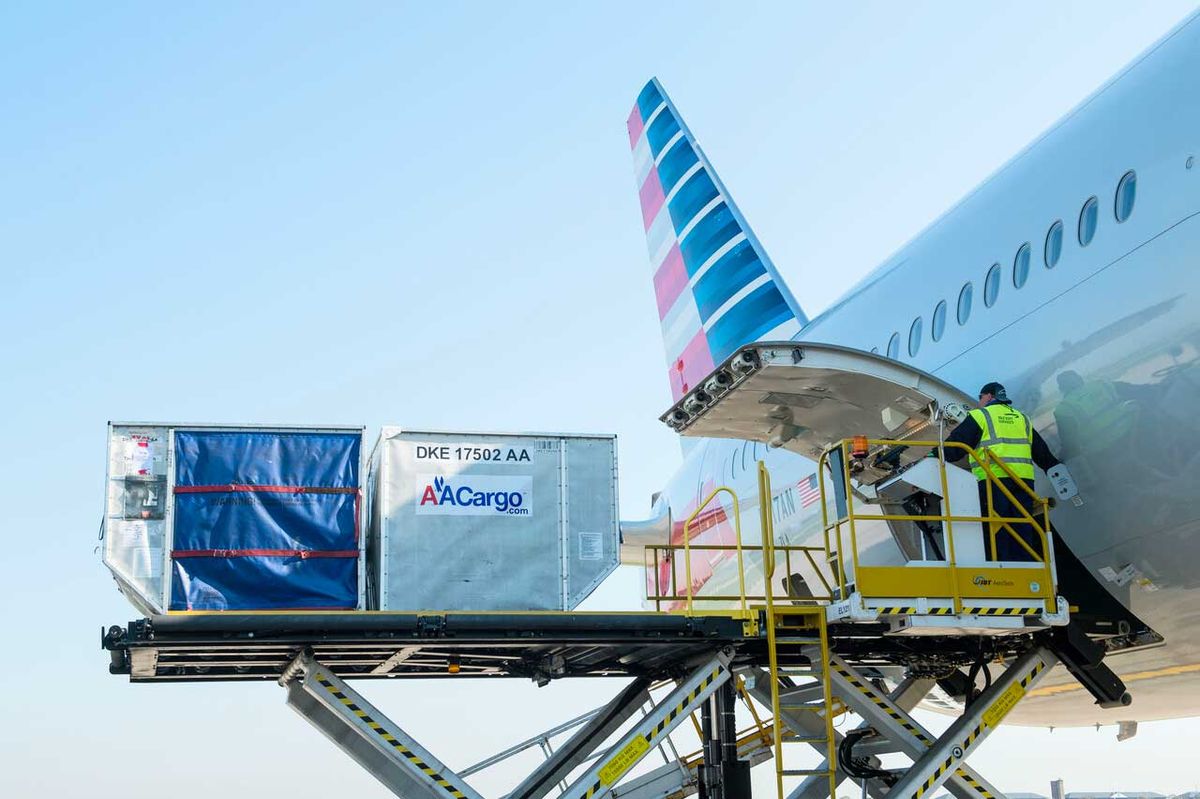
Notable Trends
- Delta's performance is in a class of its own. Delta Air Lines improved its mishandling rate from 0.63% in 2024 to 0.43% in 2025 — a 32 percent improvement and the best rate recorded by any major U.S. carrier in recent memory. Delta carried nearly 153,000 wheelchairs and scooters last year and mishandled 651 of them. For context, the next-best carrier's rate is nearly double Delta's. Whatever Delta is doing differently, it is working.
- JetBlue has fallen to last place. After ranking 7th in 2024, JetBlue now occupies the bottom of the list at 1.44% — edging out Frontier (1.43%) by the narrowest of margins. JetBlue's rate actually improved year-over-year from 1.59% to 1.44%, but the rest of the field improved faster. The airline has been through significant financial and operational turbulence, and there have long been questions about how serious JetBlue is about accessibility.
- Spirit Airlines has continued its recovery. After raising serious concerns in prior years with a mishandling rate that reached 5.35% in 2023 — almost certainly the result of underreporting the number of devices transported — Spirit has now settled into the middle of the pack with at 1.33%, an improvement from 2.07% in 2024. Whether this reflects genuine operational improvement or more accurate data reporting is a question worth monitoring.
- United Airlines is one of just two carriers to get worse. United's rate of mishandled wheelchairs is moving in the wrong direction, rising from 0.97% in 2024 to 1.06% in 2025. United still ranks third overall, but even a minor slide means more passengers with damaged or delayed wheelchairs.
- Hawaiian Airlines slipped while Alaska improved. As the two carriers integrate under a single certificate, their diverging performance stands out. Alaska Airlines improved from 1.54% to 1.37%, while Hawaiian went the other direction — from 1.04% to 1.20%. How these rates evolve as the merged airline operates will be worth tracking in future reports.
The Air Carrier Access Act requires airlines to repair or replace damaged wheelchairs and scooters at their own expense. For many wheelchair users, a damaged mobility device is not merely an inconvenience but a loss of independence, often for days or weeks while repairs are arranged. The stakes are high, and the data here reflects more than 11,000 individual events that affected real people in significant ways (myself included).
WheelchairTravel.org is the only place to find accessible travel journalism that provides detailed information about the accessibility of destinations, hotel accommodation, ground transportation and air travel from a disability perspective. As a reader-supported publication, we can only keep the lights on with your support.
As complaint data from the new ACERS system eventually comes online, I will publish an updated analysis that incorporates disability complaints alongside damage rates. Until then, mishandling statistics remain the most reliable publicly available measure of how airlines are treating disabled passengers.