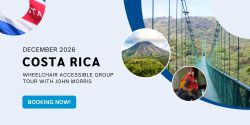
Wheelchair Travel is touring Costa Rica December 1-8, 2026 — and I want you to join me! For less than $4,000 per person (that's the cheapest group tour in years!), you can join me on a Wheelchair Travel Group Trip to a tropical paradise! The complete tour itinerary will be released MONDAY, MAY 11 at 10:00 a.m. ET (New York time), exclusively to paid members of this newsletter.
Paid members will enjoy a private booking window of 7 days. If spaces remain, free subscribers will have an opportunity to book beginning Monday, May 18.
If you would like to be among the first to receive this trip opportunity and future information about accessible group tours, please upgrade your subscription in advance of the tour release.
If you haven't seen Bottle Shock, the 2008 film starring Alan Rickman, add it to your watch list (it's free to stream on YouTube). The movie dramatizes the 1976 "Judgment of Paris," a blind tasting competition in which California wines defeated the finest French vintages. The result shocked the wine world.
I think about that film often when I look at the accessibility evaluations being marketed within the travel industry today.
An increasing number of organizations (some disability-owned!) are selling ratings and certifications to travel businesses and destinations around the world. Disabled travelers who trust in these honors are paying the price with inaccessible trips, wasted money and broken trust. I contend that "verified" accessibility is a moniker more likely to raise red flags and result in disappointing experiences than to inspire confidence.
Pay-to-Play Rankings and "Verifications" are Sweeping the Travel World
There is a major conflict of interest at the heart of accessibility certification schemes: award winners frequently sponsor the organizations handing out the awards! In what world can that be considered credible?
Take airline rankings and awards, which are rarely driven by data, but instead by prestige and sponsorship dollars. When I have ranked airlines on this site, I have done so using only data on wheelchair damage and consumer complaints sourced directly from official government reporting — not because an airline paid me (none have). I have also been upfront about what those rankings can and cannot tell you: they reflect the available data, nothing more. That transparency is something you will rarely find from organizations whose budgets depend on checks written by the businesses they are supposed to be evaluating.
Accessibility rankings, certifications and verifications of hotels and destinations sometimes do involve data collection, but that data is not held to any standard. You would think that an accessibility verification might score performance relative to the ADA Standards for Accessible Design, but they do not. These blanket certifications and verifications carry no legal weight and do not actually guarantee accessibility to disabled people. The false certifications can also open up the businesses being "evaluated" to liability — if you were looking for targets for an ADA lawsuit, start there.
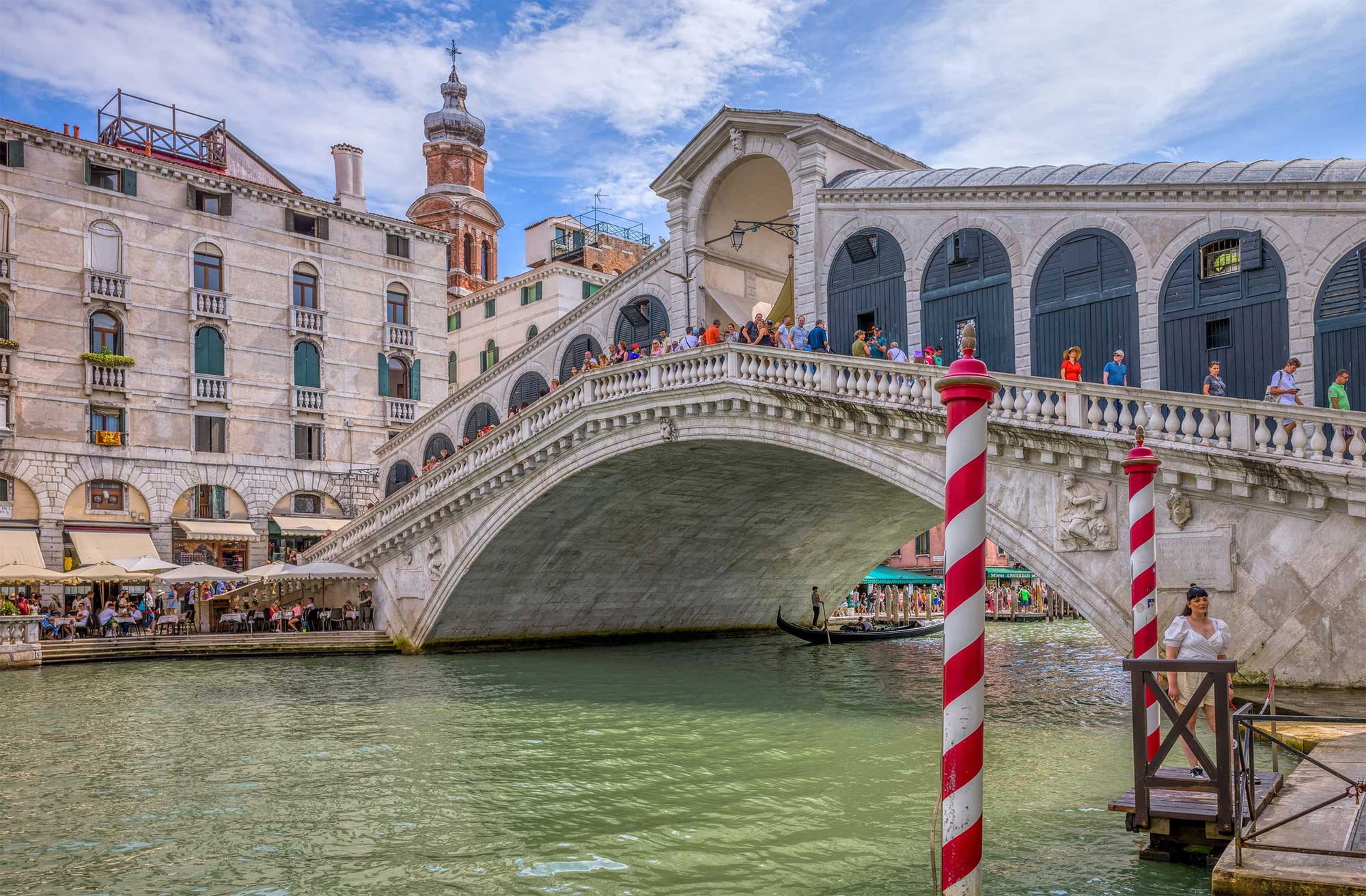
Travel & Leisure recently published a ranking of the 'most accessible cities in Europe for travelers with disabilities.' The list, which was clearly assembled with no firsthand knowledge of accessible travel, places some of the least accessible cities on the continent near the top (Venice, Italy, with its many canals and often inaccessible bridges, ranked 5th!). This very ranking was pitched to me by a PR firm for publication. I declined. Travel & Leisure took the bait.
The Broad Scope of Accessibility Claims Should Raise Suspicion
Here is a useful rule of thumb: the broader the accessibility claim, the less you should trust it.
If a hotel posts a picture of an accessible room showcasing a roll-in shower with a fold-down bench, I can work with that. But if a hotel — or any business — tells me it is "fully accessible" or "accessibility verified," I am immediately suspicious. What do those terms mean?
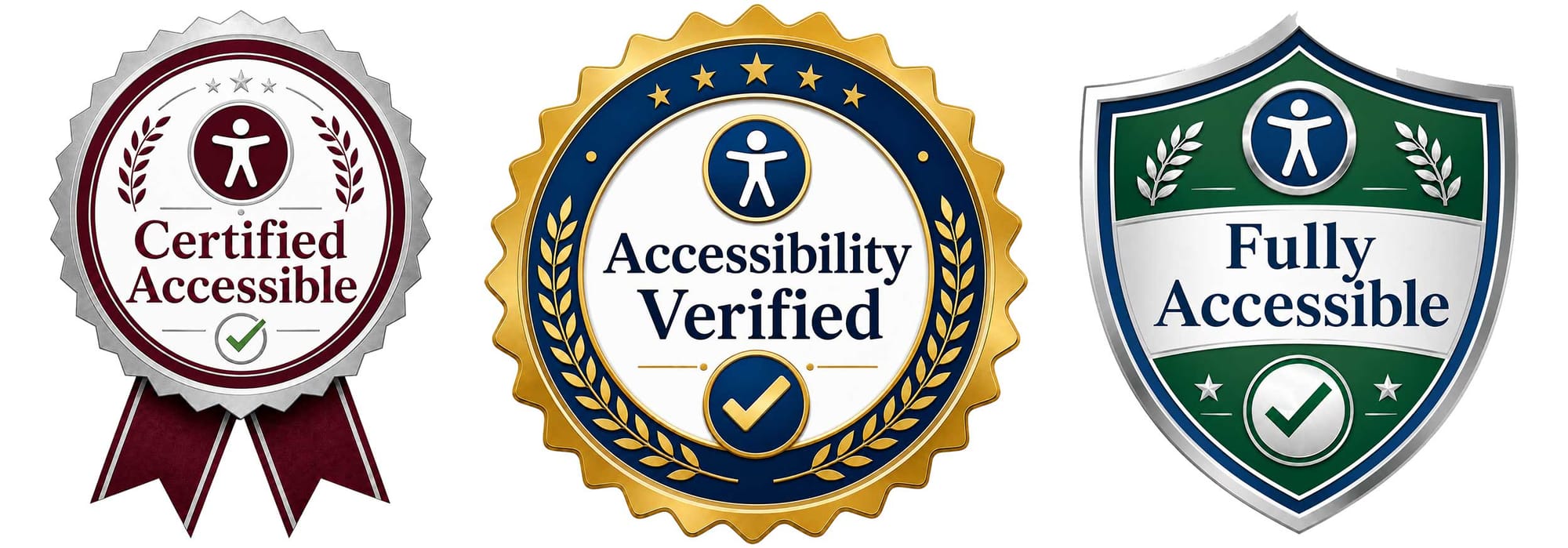
Some organizations are scaling up their reliance on vague awards and certifications dramatically. I have seen entire states marketed as "accessibility verified." Surely that is not a valid certification! If an entire state is "accessibility verified," does that mean I can get a wheelchair accessible taxi in every city within its borders? Does that mean every accessible hotel room in the state is ADA compliant? Does that mean every sidewalk is passable to a wheelchair user? Of course not. No organization has the authority to make that determination — and yet, the claim gets made, money changes hands and the badge goes up on the website.
"Fully accessible" is the most bogus phrase in the travel industry and should be treated as an immediate red flag by anyone planning an accessible trip. Common sense tells us that no property is fully accessible to every person with every form of disability.
 John Morris
Disabled Travelers are Victimized by False Claims of Accessibility
I started WheelchairTravel.org because there was too much false information in the accessible travel space — too many articles written by people without lived experience of disability, too many hotels falsely claiming to be "ADA compliant" and too many "accessible" tours that could not accommodate wheelchair users. That problem has not gotten better. In many ways, the widespread publication of AI-generated content and the rise of pay-to-play certification schemes has made it significantly worse.
On the internet, bad information perpetuates endlessly. It gets picked up by other publications, regurgitated by AI chatbots and quoted ad nauseam. A traveler searching for accurate information before a trip may encounter the same false claim repeated across a dozen different websites, all of which trace back to a single sponsored press release or AI hallucination.
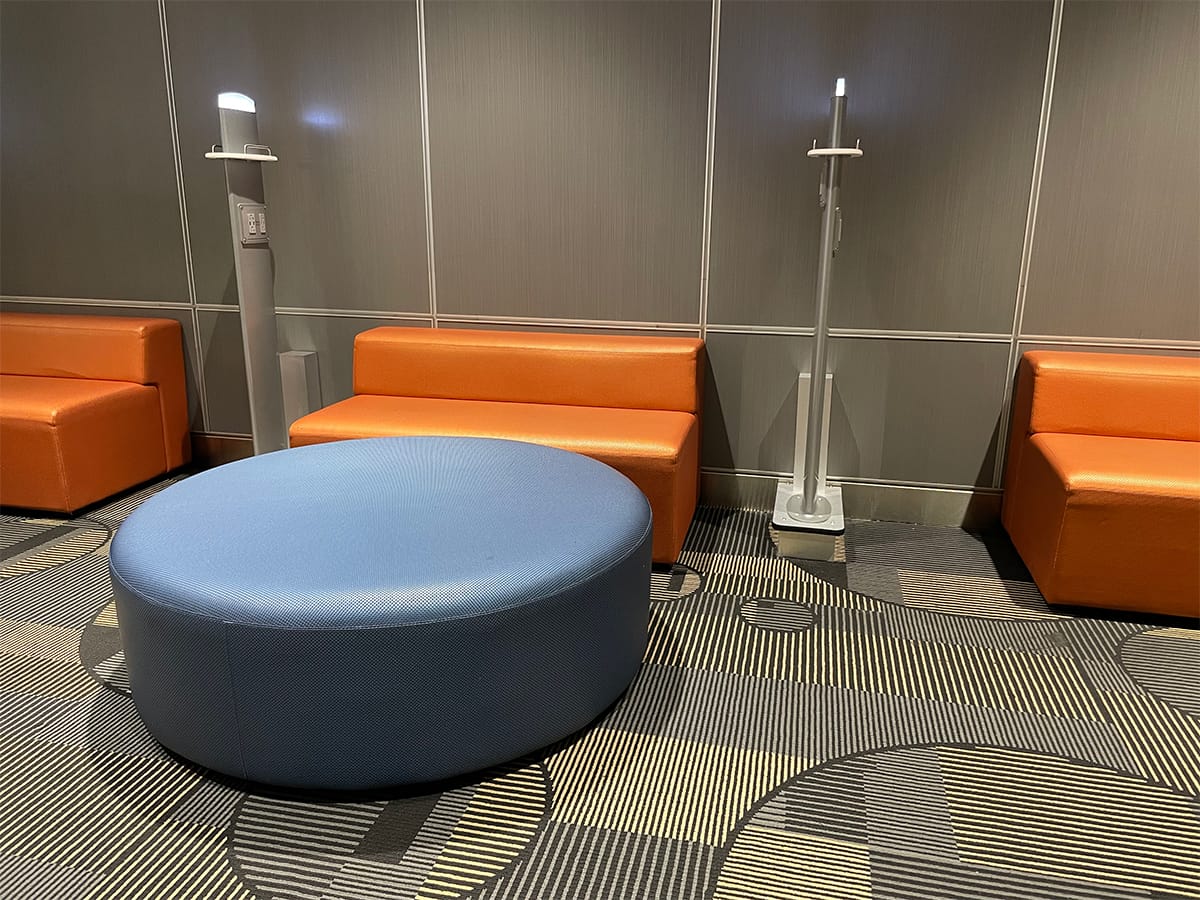
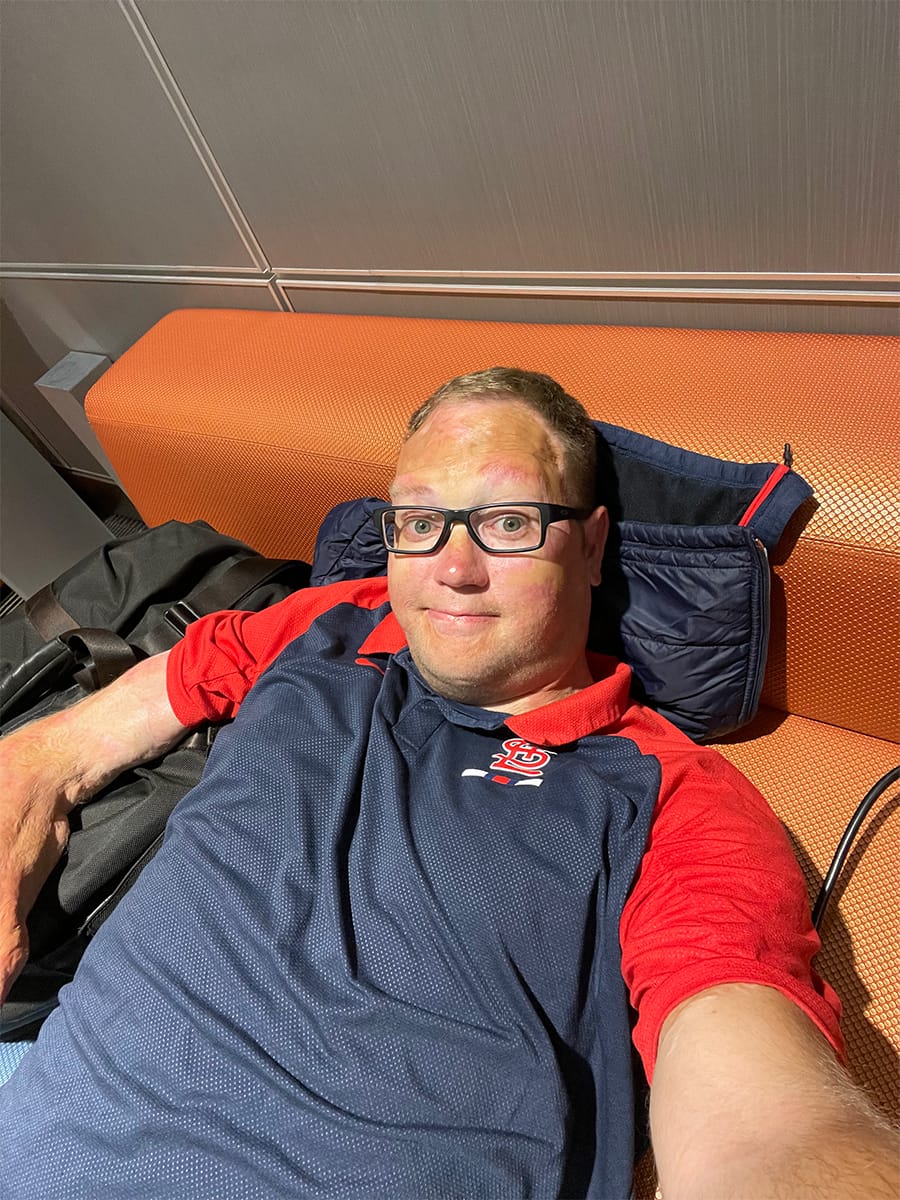
At least I found a comfy place to lay down in the Tampa, Florida Airport.
The consequences are real: Disabled travelers who rely on false accessibility claims face both financial and physical harm. Non-refundable hotel nights in rooms we cannot use, transportation unable to accommodate our wheelchairs and experiences we paid but cannot access are just the start. Some of us are left stranded — like in one "accessibility verified" city, where I had to sleep in the airport overnight because there were no wheelchair taxis! Some of us might spend our entire vacation managing a crisis that accurate information could have prevented.
What Travel Businesses and Destinations Should Be Doing to Promote Accessibility
If a destination or business genuinely wants to serve disabled travelers, they need to pursue a new strategy that invests not in bogus accolades, but in developing a truly welcoming environment for the disability community.
Start with honest disclosure. Tell me what you can and cannot do. Tell me directly, on your website and not through a third-party, where the accessible entrance is located, whether your shuttles are wheelchair accessible and what the bathroom looks like. Transparency is the core building block of trust.
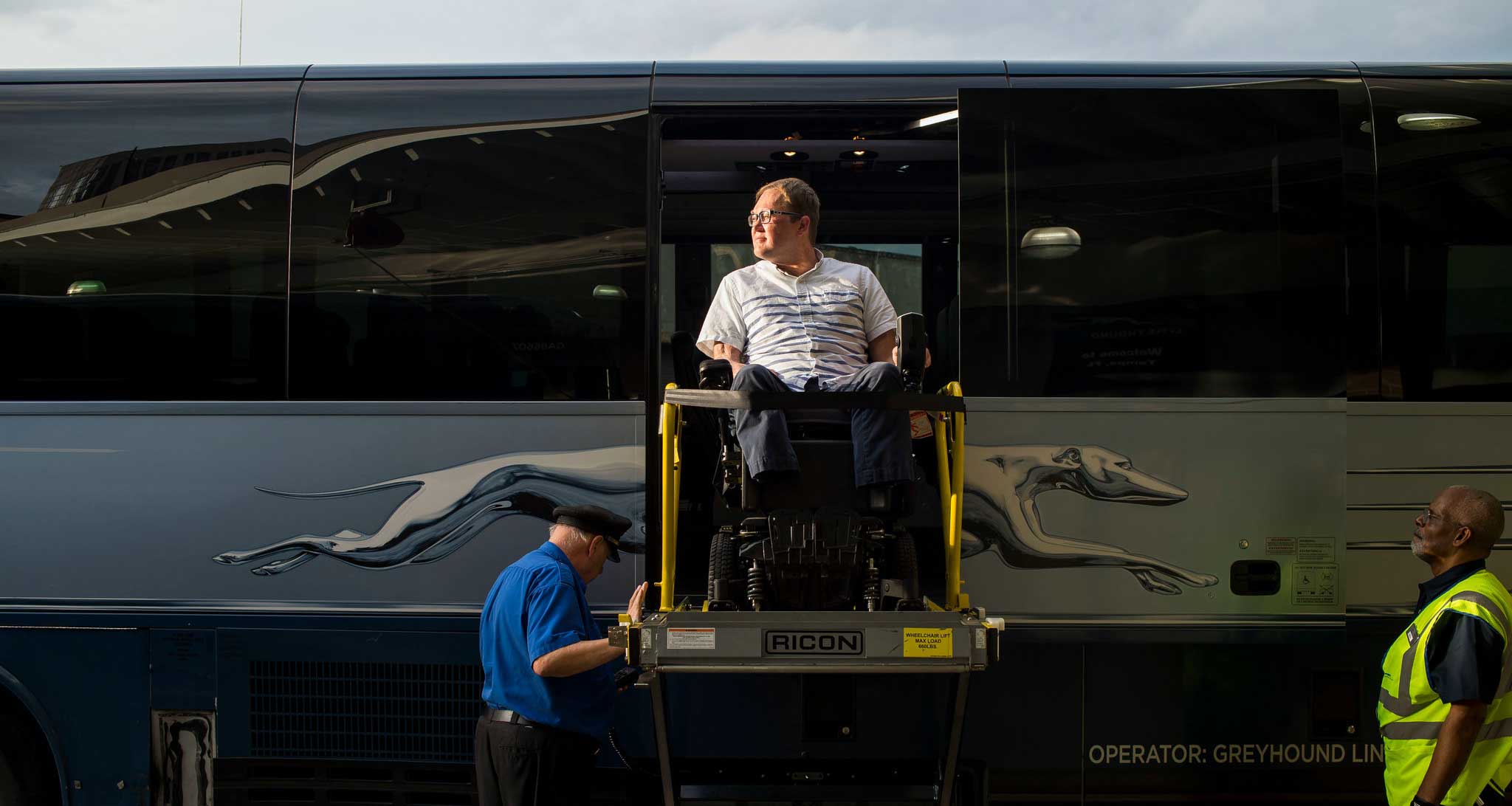
Invest in remediation, not verification. Paying a third-party organization to certify your existing accessibility features does nothing to improve those conditions. The money spent on certification fees would be far better directed toward fixing the actual shortcomings — widening doorways, installing proper roll-in showers, training staff or acquiring accessible vehicles. Businesses should work to solve deficiencies in accessibility, rather than papering over them!
Proper training is important, but it is not a one-time event. Staff turnover in customer-facing hospitality roles is extremely high, which means the employee who received accessibility training six months ago may no longer be there and the person who replaced them may not have received any training at all. Recurrent, ongoing training is a requirement for any organization that is serious about accessibility.
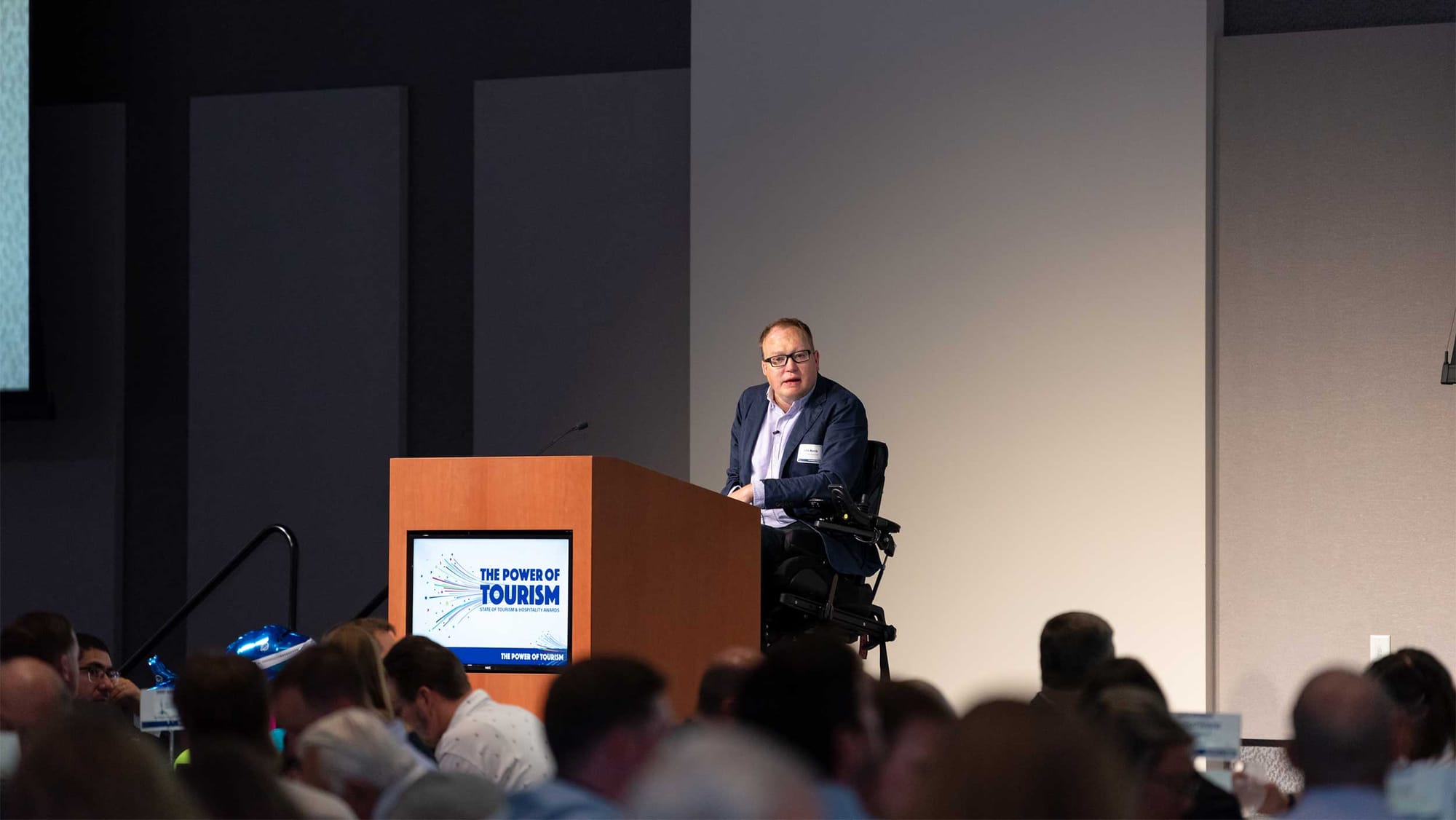
Finally, and most importantly, engage with the disability community! Photo opportunities and token advisory panel don't cut it — establish ongoing relationships with people who live with disabilities, who have traveled extensively and who have a track record of telling the truth even when it is uncomfortable. We are far more valuable to your accessibility strategy than any certification company selling worthless window stickers.
Final Thoughts: On Loyalty, Trust and the Disability Community
Disabled travelers are among the most loyal customers in the travel industry. When we find a hotel that genuinely works for us, a tour operator who gets it right or an airline that treats our wheelchair with care, we go back. We tell our friends. We write about it. The accessible travel market is worth tens of billions a year, and the lifetime value of a disabled customer is significant! I still have forty years of travel in me — I hope!
On the flip side, disabled travelers are also vocal when accessibility claims, certifications and verifications do not match reality. We demand accountability and warn other travelers. We look out for each other.
The business case for accessibility is not complicated: massive growth potential awaits destinations who are prepared to serve an aging population and the ever-growing disability community. The business case for misleading certifications and refusing to make the accessibility investments that matter is even simpler: there is none! When accessibility claims do not match reality, no second chance will be given.
The wineries participating in the 1976 Judgment of Paris did not win because they bought a prize, but because they were genuinely good. That is the only standard worth pursuing.