As soon as I saw her lingering stare toward John — her lips caught between a downturned pout and a sympathetic smile — I assumed we were about to receive one of those all-too-familiar inspirational affirmations, such as “you’re an angel.” Considering I had already been adjacent to the disability experience with Robert, I thought I knew what to expect, but what was said next caught me completely off-guard.
Let me set the scene a little more: John and I were on our second date, enjoying breakfast before heading to the Knoxville Museum of Art. Our first in-person date was only the night before, but we were already well past the introductory stages. We had a deep friendship and an ongoing long-distance relationship. So, there we were, enjoying the excitement of having quality time together, when a staff member interrupted us to tell me about her amazement at John being responsible for his own meal and *gasp* getting his own juice from the serving station. “He doesn’t even have a whole body!” she exclaimed.
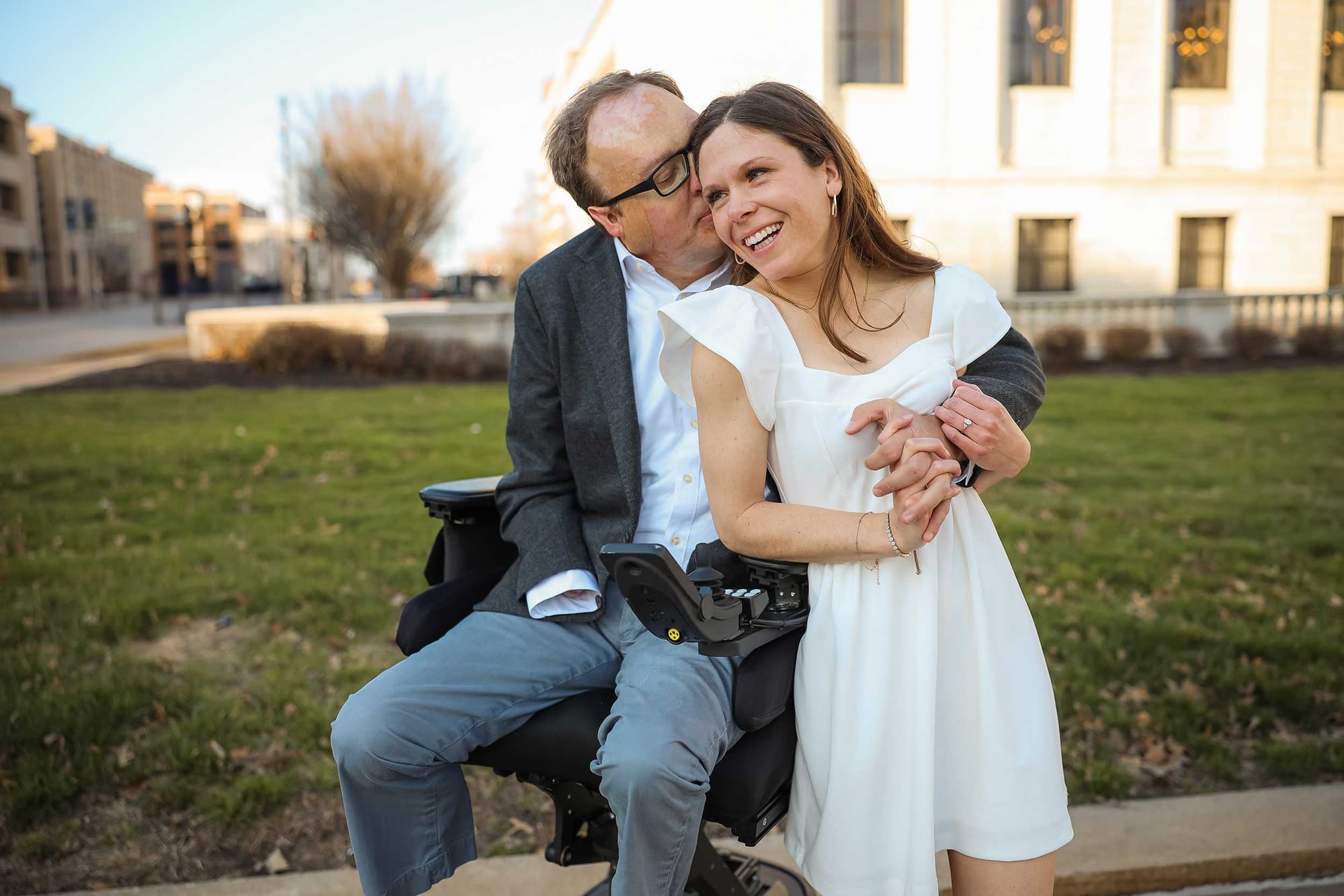
It was so pointed, so incredibly specific, that I couldn’t even formulate any words. I stifled my spreading grin, gave a curt head nod, and briskly left the restaurant, barely making it outside the door before bursting into the first of many giggle-fits that John would witness.
This is something that we do together often — try to find the humor in the absolute absurdity of people’s ignorance. It’s also currently one of the top things that elicits an eye-roll from Robert, but we attribute this to normal teen angst and know he actually benefits from the humor we share as parents in the everyday moments.

I’ve thought a lot about this interaction since then and tried to visualize if I would have reacted differently if I was with Robert or if I would have expected Robert to respond differently. It’s a constant mental task to teach him to respond to ableism. It’s nuanced, complex and goes against many of the other “rules” that we unknowingly adapt as we learn to function in society. Uncovering these biases and teaching Robert to respond to ableism is one of the most recurring conversations in our parenthood.
It’s considered rude to ignore people, yet I taught Robert he can walk away in the face of intrusive or infantilizing comments.
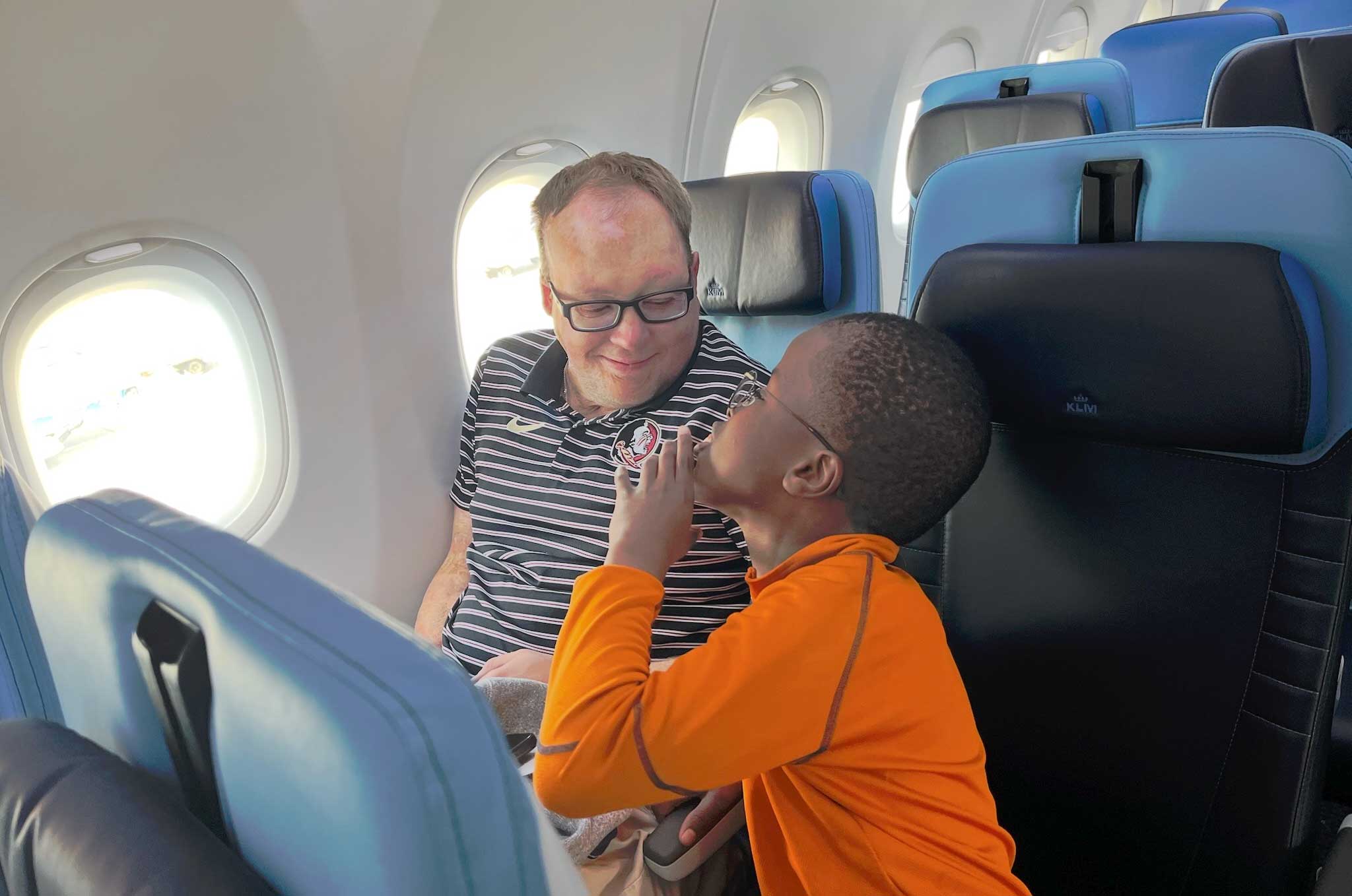
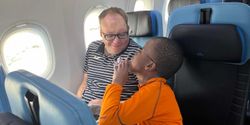
We are taught to automatically submit to authority, but John models and helps Robert practice prioritizing his needs while questioning which claims to authority are valid — when an airline wheelchair assistant demands that John and Robert exit the airplane before their wheelchairs have been returned to the jetbridge, they rightly decline. John's article on challenging the authority of gate agents and assistance staff is a must-read:
 John Morris
People expect us to offer explanations for mobility aids and accommodations, but we have a list of set responses such as “we don’t share personal medical information” practiced and ready to use.
“Thank you” is the expected response when given help, but I’ve told Robert he can pull away without so much as a glance if someone tries to grab his wheelchair. I reflected in depth on how disabled kids are conditioned to say “thank you” for equal access – you can see that in my article, Reasonable Accommodations and How Much Gratitude is Too Much?
 Stevie Morris
Honesty is one of the most important values in our home, except when it comes to making up a laughable, totally false tale about how Robert or John became disabled. Did you know that John's leg amputations were from a shark attack? Yes, he has actually used that as a response to shut down ridiculous “What happened to you?” questions.
Some might say perhaps it would be easier to have one response strategy for Robert or to not give him agency over responding because of how he could be perceived. But what is the cost? I have to look to the future to make a choice about our present strategies. We could help to form a young teen who follows the rules and fits the mold but sacrifices a piece of his dignity or a young teen who maybe ruffles a lot of feathers but is true to himself and self-advocates. It’s glaringly obvious to me what the greater-good is out of those two outcomes.
That being said, it can feel overwhelming to tackle such a heavy, seemingly lofty goal. Responding to a widespread social justice issue in a personal way in the day-to-day is hard. Here are some mental shifts that have helped me align my focus.
Perspective: I’ve come to think of our work against ableism like doing the laundry – there isn’t really a time where it will ever be fully accomplished, and I really just have to accept that. We are always in one stage of doing laundry around here – piling up dirty clothes, washing, drying, folding, putting clothes away. Sometimes I avoid the whole thing for an embarrassing amount of time. Sometimes I double down and power through multiple loads at a time, taking a full day to catch up. Even if I do this, I still have the clothes on my body that are now dirty. The cycle keeps going. Recognizing this cyclical nature vs a check-box mentality has afforded me a more balanced viewpoint. I don’t have to judge my success or accomplishment on the full completion of a task that’s never really done anyways. Responding to ableism is a lot like this. We do a little here, a little there. We learn and practice one response, then pivot to a different approach. Sometimes we take a break because it’s too overwhelming or we are simply exhausted and lacking the bandwidth. It’s all part of the full spectrum of experience.
Discussing: If there is one takeaway from this article to help you decide how to teach your child to respond to ableism, it is this: always, always ask questions and examine responses together. I am constantly asking Robert, “What can we learn from this?”, “What worked and what didn’t?”, or “I noticed ___, how did that make you feel?”. His responses and feelings change with time and growth, and sometimes they surprise me! The goal here is not finding a magic fix but in problem solving together.
Rehearsing: Once we have identified a recurring problem, we practice our response! We have practiced with stuffed animals, acted out different situations, and drawn a comic book together about a strategy we wanted to use. For example, boarding an airplane was a constant source of stress. Assistance staff would assume Robert's ability and begin moving his wheelchair or making decisions about how to board without asking. We discussed what approach would work best, and then practiced at home; I would pretend to be the assistance staff grabbing his chair without asking, and Robert would try responding clearly and respectfully. The repetition helps us remember what to do when we encounter the situation in a higher stress environment.
Wheelchair Travel is still a travel website, but we are also documenting the experiences of navigating the world (and travel) as a family. If you would like to contribute to our work (and receive more content direct to your inbox), please consider upgrading to a paid membership. We would be grateful for your support!
At this point in our lives, we have a wide array of skills to respond to ableism, yet we're sometimes still left stumbling, feeling like we should have chosen a different approach. It’s a lot of pressure to constantly examine our interactions with others. John and I also realize that what is acceptable in response to ableism changes with many factors like age, race, gender or type of disability because all of these are associated with people’s already established assumptions. We’ve found a combination of planning ahead and trying different approaches has aided Robert’s confidence in responding to ableism. We hope that this article is a springboard for yourself or your kids as you navigate these tricky situations!