Time on trains, waiting at the gate, and air travel delays all provide opportunities for a good read. In fact, I'm working on an article about boredom busters for kids while traveling, and I mention here too that one of our favorite travel activities is reading. Personally, I read almost nightly and have been in a book group with some of my closest friends for nearly five years – I don't think I can overstate our fondness for books as a family!

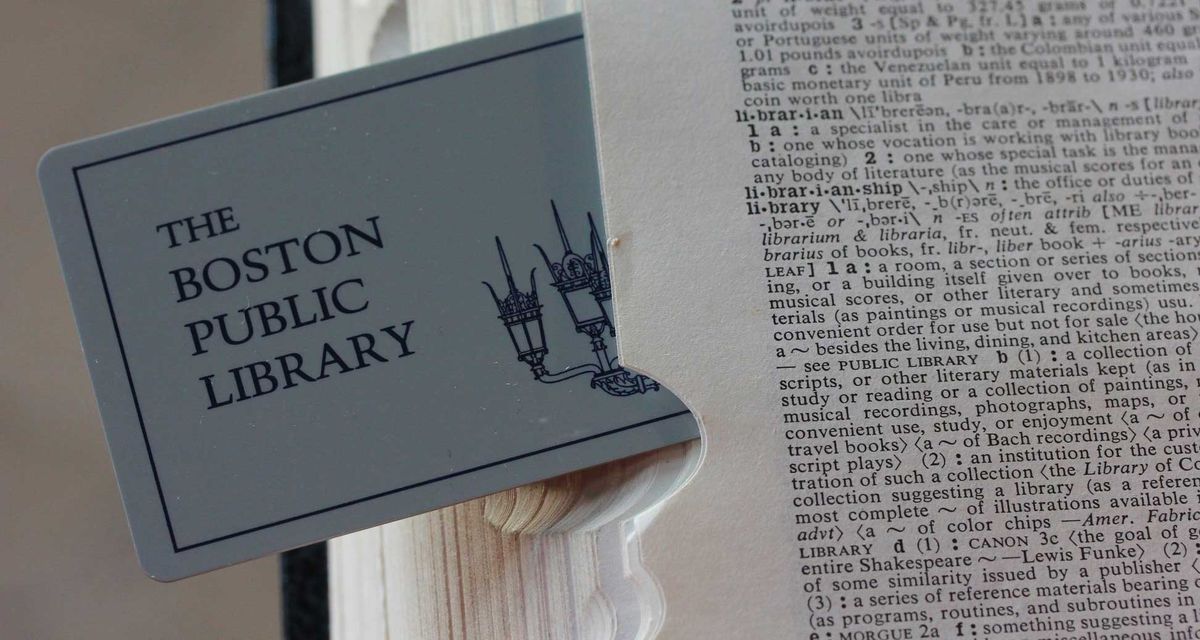
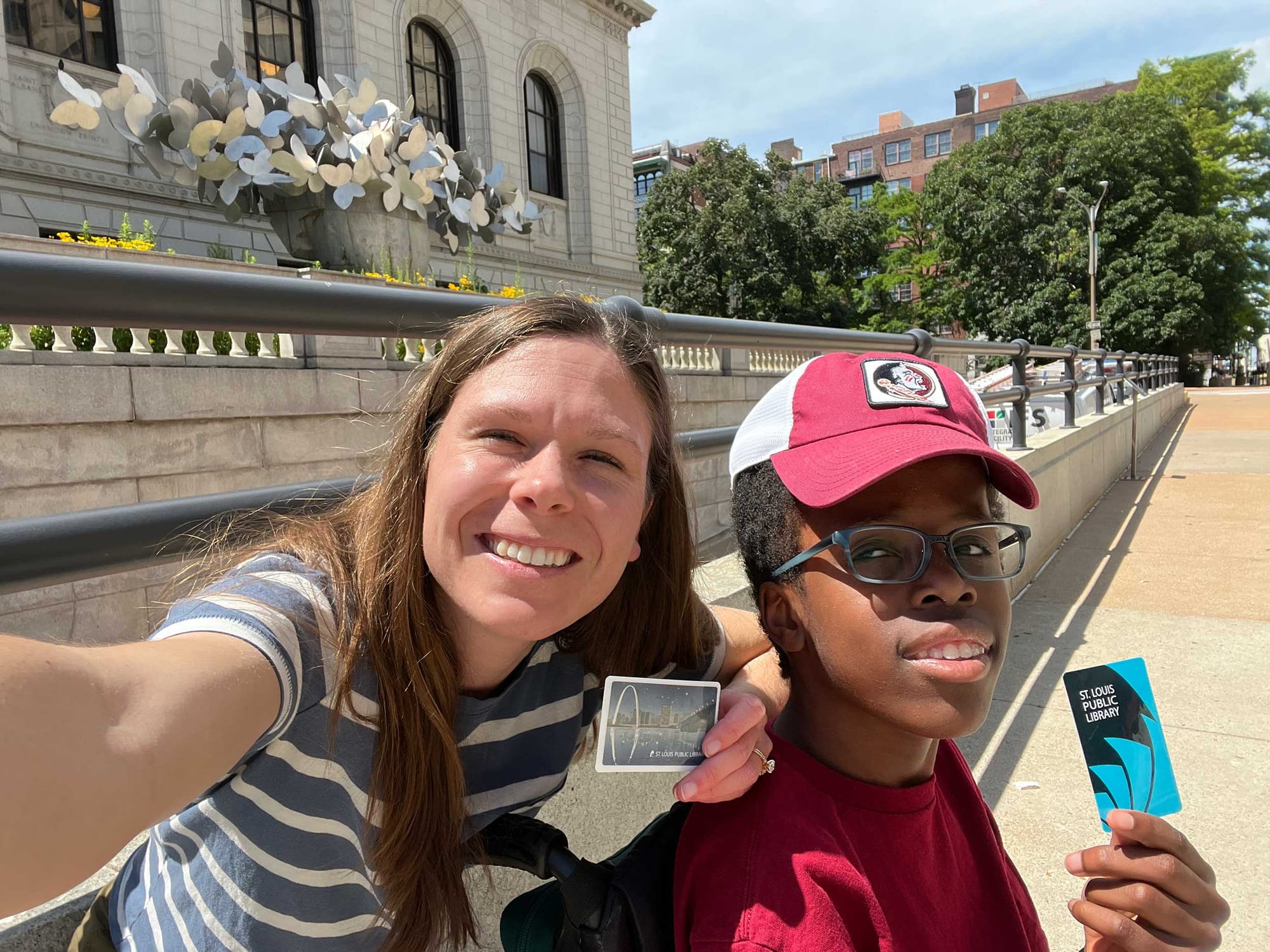
Our new home library in St. Louis is a beautiful, grand, old building that gives all the vibes one hopes to feel when surrounded by books. Posted around the outside of the building are quotes about reading, one of which I particularly appreciate:
“I choose free libraries as the best agencies for improving the masses of the people because they only help those who help themselves. They never pauperize. A taste for reading drives our lower tastes.” —Andrew Carnegie
I love introducing people to good books, so I decided to share some of our favorites here! It was a tough choice, as we have read hundreds of books over the years, but I chose to feature our top 4 disability-lit books per loose age grouping.
Early Childhood Picture Books
What Happened to You? by James Catchpole
I have personally adored the Catchpoles for years via their Instagram page and was thrilled when James released his first book to the US in 2023. It is down to earth and precisely pinpoints an unspoken experience most (if not all) disabled kids encounter. In the book, he uses the main character, Joe, to show a big, overwhelming problem of ingrained ableism in a way that kids can understand. I cannot express enough how empowering it is to finally read something and say, “Yes, that! That exactly points out the problem. I didn’t have the words to explain it so clearly, but now I have a way to share.” The other books by both Lucy and James are a fabulous bonus to this favorite.
Best Day Ever by Marilyn Singer
This fun, early children’s book is about a puppy who loves her boy. It’s as simple and upbeat as that, plus the boy uses a wheelchair. We found this book after using Leah Nixon’s (the illustrator’s) card artwork for some time. It’s one of those books that is disability representation without having to state it outwardly. I sometimes think about books through the lens of windows and mirrors – windows being the books to learn about another’s point of view and mirrors being those that reflect one’s own lived experience. I think all kids should have both types of books on their shelf, but there has long been a void in children’s literature for disabled kids to have ‘mirrors’. This book helps fill that gap!
I Talk Like a River by Jordan Scott
A quick Google search of disability representation in children’s books will likely lead you to this book by Jordan Scott. The plotline follows a boy, who, with the help of his father, relates his stutter to a river. It is beautiful both in words and illustration and has received multiple awards! The artistic expression of Jordan’s own experience with a stutter within the book is wholesome and real. The writing style allows it to transcend generations; It's a book you will likely want to read alongside your child.
All the Way to the Top by Annette Bay Pimentel
This illustrated biography of Jennifer Keelan-Chaffins is a way to introduce a piece of disability history to your child. Jennifer was a part of the Capitol Crawl at a young age – this book tells her story that day, interwoven with the disability movement. The importance of that simply cannot be overstated! Many books on disability history are about adults making an impact, but this story is special because it’s about a kid making a big difference. She exemplifies the belief that we can all contribute to making the world more accessible.
Would you like to receive more articles like this one? Support our work to advocate for a more accessible world by upgrading your membership and you'll receive access to the web's largest collection of accessible travel content, along with stories from our family adventures.
Middle Grade Novels
Insignificant Events in the Life of a Cactus by Dusti Bowling
This is Robert’s self-proclaimed favorite; He has read this book several times front to back but also will re-read favorite sections. Even though the author is not disabled herself, this was the first chapter book Robert read that felt closest to a realistic characterization of disability. We found that being able to have a discussion on the subtleties she missed was beneficial in itself and helped broach the topic of disability representation. The main character, Aven, was born without arms, and while that is a central part of the book, it’s certainly not the only takeaway. The distinction is refreshing. Aven and her family move to a different state, and the book is filled with humor, lighthearted mystery, self-discovery and friendship (another disability layer is that her new friend has Tourette Syndrome).
Wink by Rob Harrell
Similar to Insignificant Events in the Life of a Cactus, the cover of this book is wrinkled, worn and home to pages filled with fingerprints and stains – the sign of another favorite.
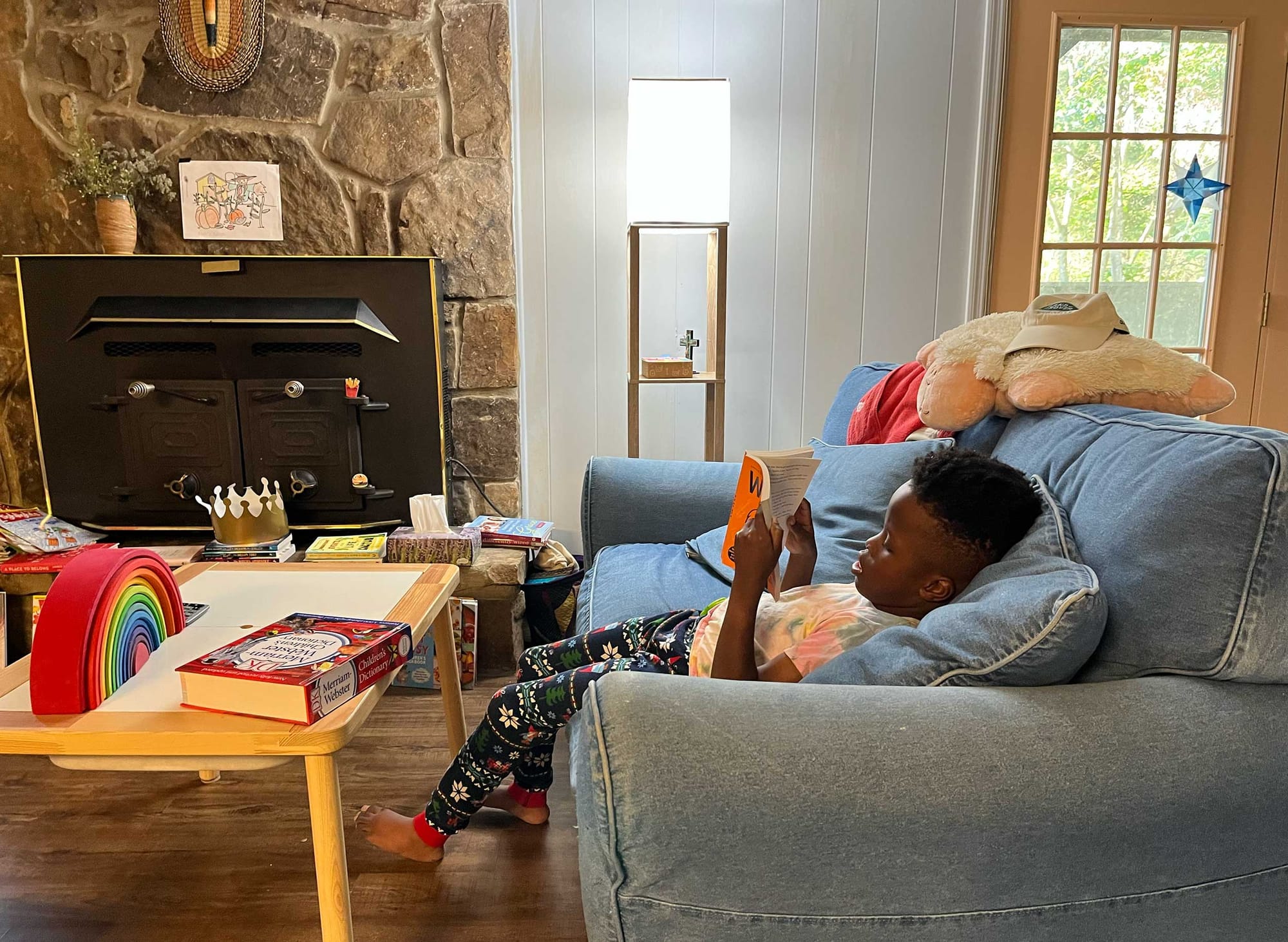
The author, Rob Harrell, based the main character, Ross, on an early life experience of having a rare form of eye cancer. Ross is just trying to navigate middle school when he receives his diagnosis, and the story that ensues brings quirkyness, music and life-lessons to the surface. Robert really enjoyed that Ross feels real and relatable to anyone who may not fit in the ‘typical middle-schooler’ label. It made him both laugh and reflect, thus distinguishing it as a worthwhile read in both of our minds.
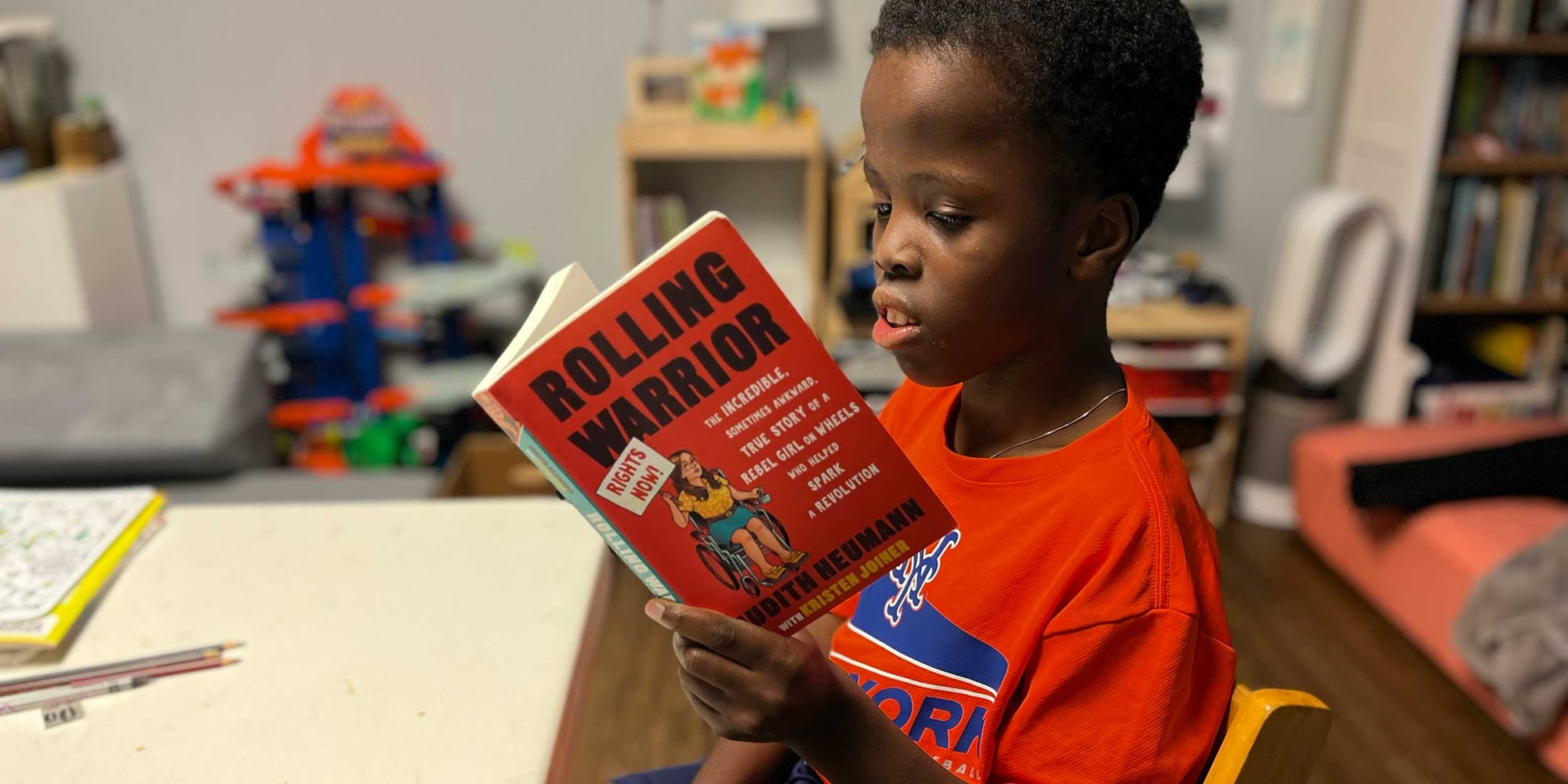
Rolling Warrior by Judith Heumann and Kristen Joiner
You will find the adult version of this autobiography later in our list because I think Judy Heumann’s story is important for all ages. The bravery and persistence that is exemplified in this memoir ignites a call-to-action.
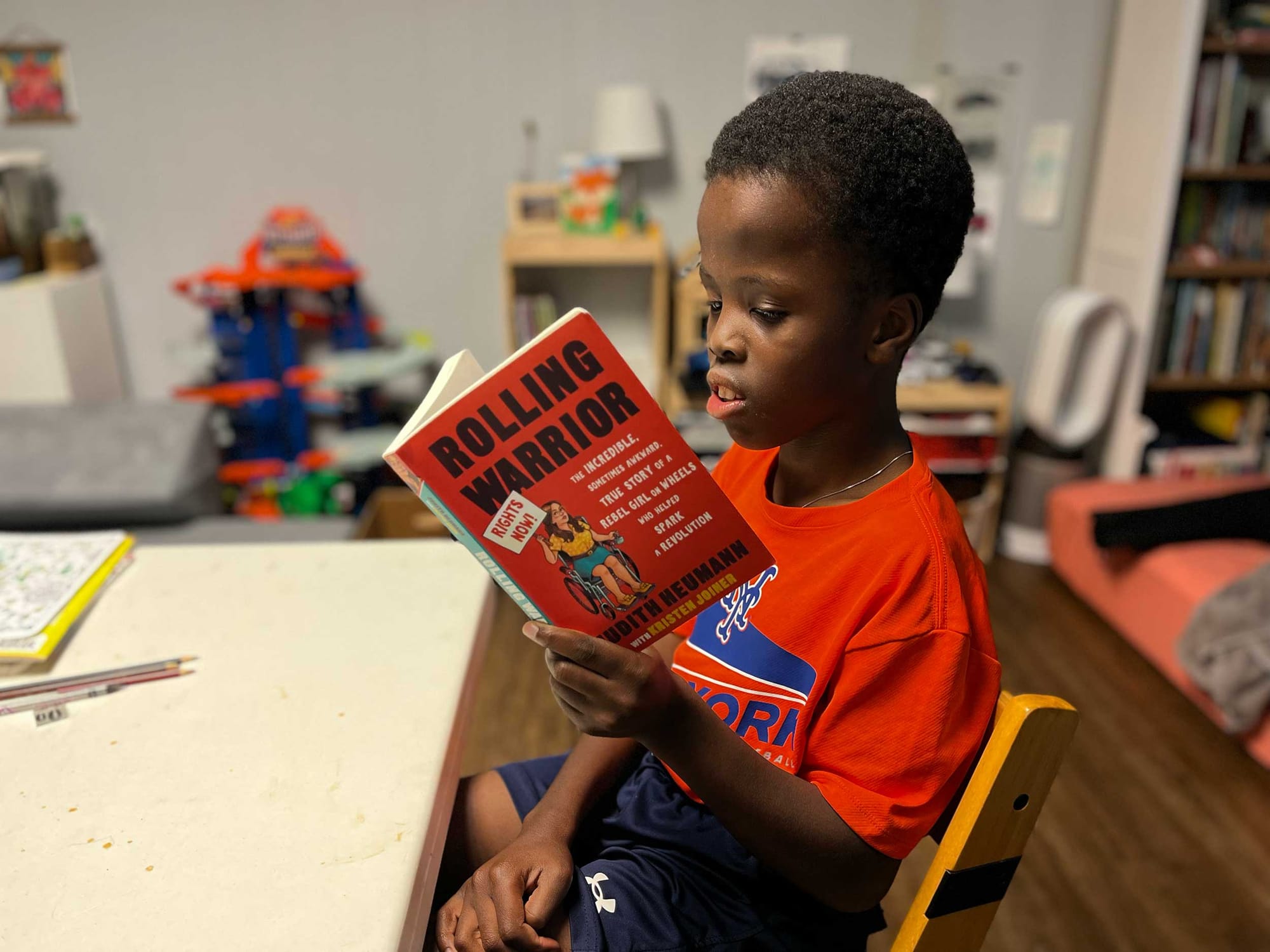
Robert found himself surprised at times for the barriers that Judy faced but also found himself nodding along in shared identity. The book allows a first-hand peek into a genuine account of disability history. I think the subtitle to the book is perfectly fitting: The Incredible, Sometimes Awkward, True Story of a Rebel Girl on Wheels Who Helped Spark a Revolution. I’m grateful for Judy’s life and especially glad she was able to adapt her memoir to a younger audience.
I Am Not a Label by Cerrie Burnell
Similar to Rolling Warrior, this book highlights real disabled people. It features short descriptions and accomplishments of over 30 different disabled artists, thinkers, performers and activists. It’s unfortunately uncommon for kids with a diagnosis to be pigeon-holed into a particular lifestyle, but this book pushes back against that. We appreciated that it expands the scope of possibilities and provides role models for all kids. In a time where disability representation still needs growth, this book invigorates the imagination and hopefully encourages your child to say, “Wow, I could do something like that too!”
Titles for Young Adults and Adults
Sitting Pretty by Rebekah Taussig
Memoirs are probably my favorite genre for reading; I love learning about the world through another’s point of view and expanding what I know about the human experience. Sitting Pretty was one of the first books I read by a disabled author, and it remains one of my favorites. Rebekah’s writing allows for nuance. She does not shy away from reality and remains hopeful in a way that is not glossed over. The series of essays within the book are reflections in which Rebekah unpacks disability both personally and in the broader context of the world. It helped me to examine the ways in which I viewed disability, and for that I am grateful.
A Face for Picasso by Ariel Henley
There are books that challenge us and then books that leave us changed. For me, this was one of those books. Ariel’s writing is raw and poignant, thought-provoking in a way that caused me to examine underlying societal beliefs differently. In her novel, Ariel shares experiences and reflections on growing up with Crouzon Syndrome, a rare condition where the bones in the head fuse prematurely. She presses into the topic of discovering identity and beauty, a space that is often not discussed below the surface level. I appreciated her bold honesty throughout the book.
Being Heumann: An Unrepentant Memoir of a Disability Rights Activist by Judith Heumann with Kristen Joiner
Chances are, if you’ve been in the disability community for a while, you have heard Judy referred to as “the mother of the disability rights movement.” Judy was a champion of disability rights from the 504 Sit-In and the passage of the ADA all the way to serving the Obama Administration as the Special Advisor on Disability Rights for the US State Department. She shares unflinching truths from her life in her book, and I found it fascinating to learn in detail about her personal account of such major points of history.
Haben: The Deafblind Woman who Conquered Harvard Law by Haben Girma
I was intrigued at Haben’s life because she objectively had to overcome a lot of odds to accomplish so much in her life. Let me clarify: The odds I’m talking about are not overcoming her disability but having to adapt, advocate and make a way for herself in a world that is not set up to be accommodating. I loved her childhood anecdotes throughout the book and getting a glimpse into the life that shaped her into the strong woman she is today. Something that sticks with me from her story is her outlook to use disability as a means for innovation.
 John Morris